The world economy continues to face multiple crises, jeopardizing progress towards the Sustainable Development Goals (SDGs). Although global economic growth outperformed expectations in 2023 with several large economies showing remarkable resilience, simmering geo-political tensions and the growing intensity and frequency of extreme weather events have increased underlying risks and vulnerabilities. Furthermore, tight financial conditions also pose increasing risks to global trade and industrial production.
This short paper briefly describes the methodology of this new index and presents some empirical results. It also presents an extension that covers both export and import concentration.
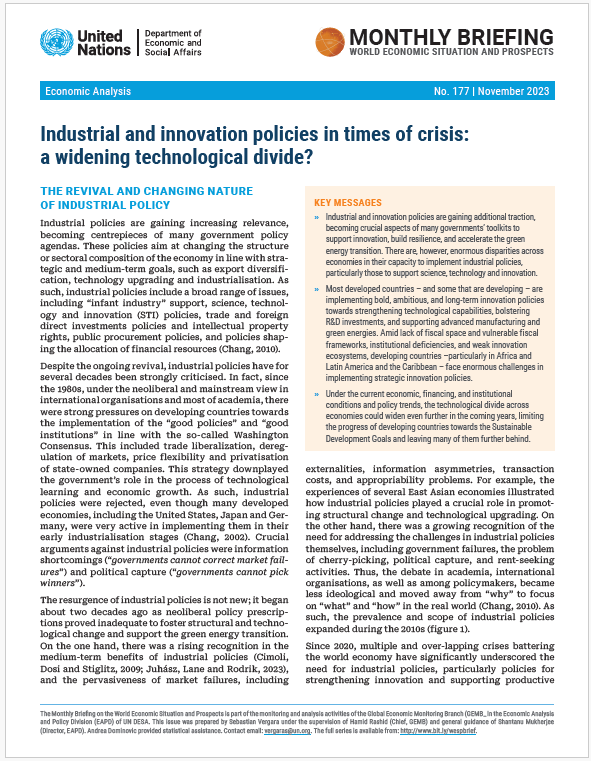
Industrial and innovation policies are gaining additional traction, becoming crucial aspects of many governments? toolkits to support innovation, build resilience, and accelerate the green energy transition. There are, however, enormous disparities across economies in their capacity to implement industrial policies, particularly those to support science, technology and innovation.
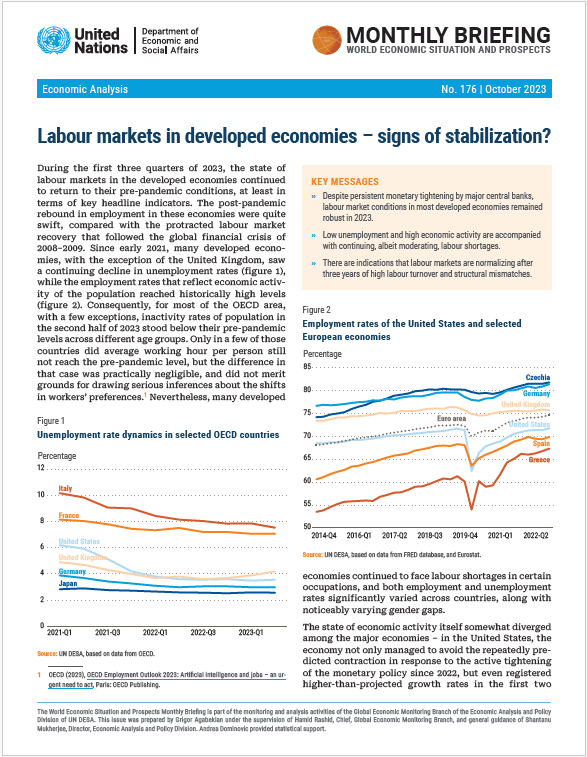
Despite persistent monetary tightening by major central banks, labour market conditions in most developed economies remained robust in 2023. Low unemployment and high economic activity are accompanied with continuing, albeit moderating, labour shortages.
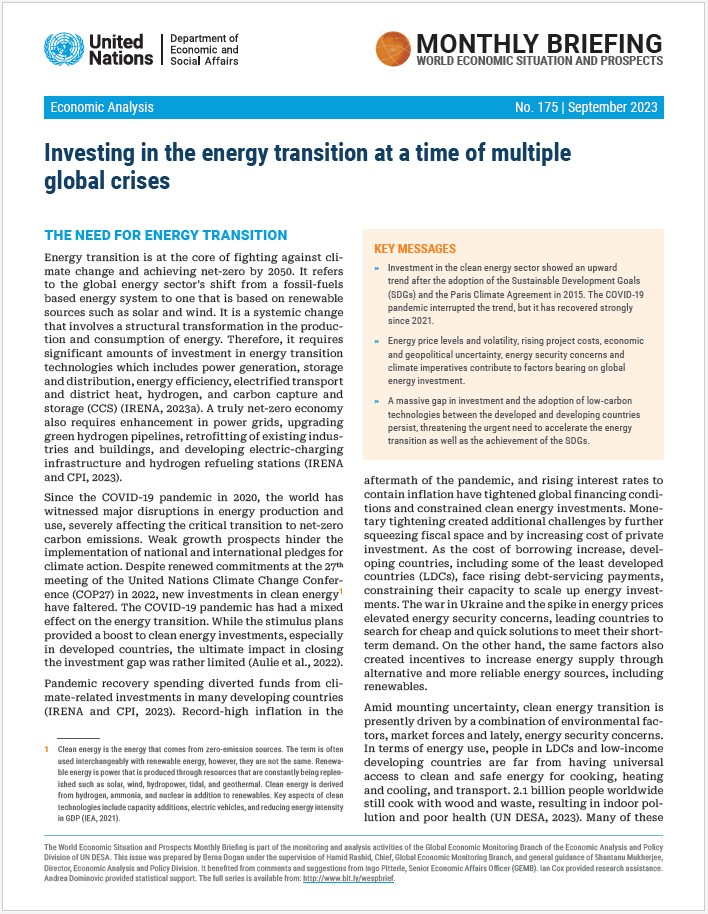
A massive gap in investment and the adoption of low-carbon technologies between the developed and developing countries persist, threatening the urgent need to accelerate the energy transition as well as the achievement of the SDGs.
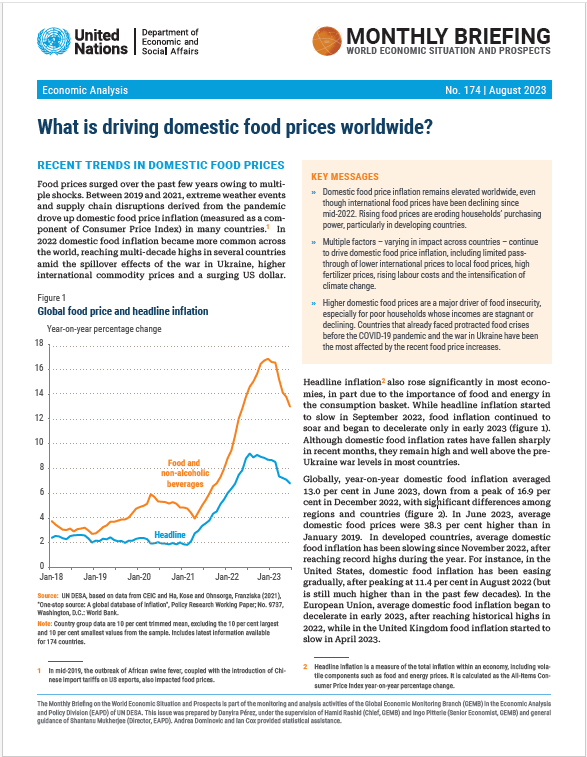
Higher domestic food prices are a major driver of food insecurity, especially for poor households whose incomes are stagnant or declining. Countries that already faced protracted food crises before the COVID-19 pandemic and the war in Ukraine have been the most affected by the recent food price increases.
This paper discusses the escalating external debt distress and financial constraints faced by many least developed countries (LDCs) and other developing countries.
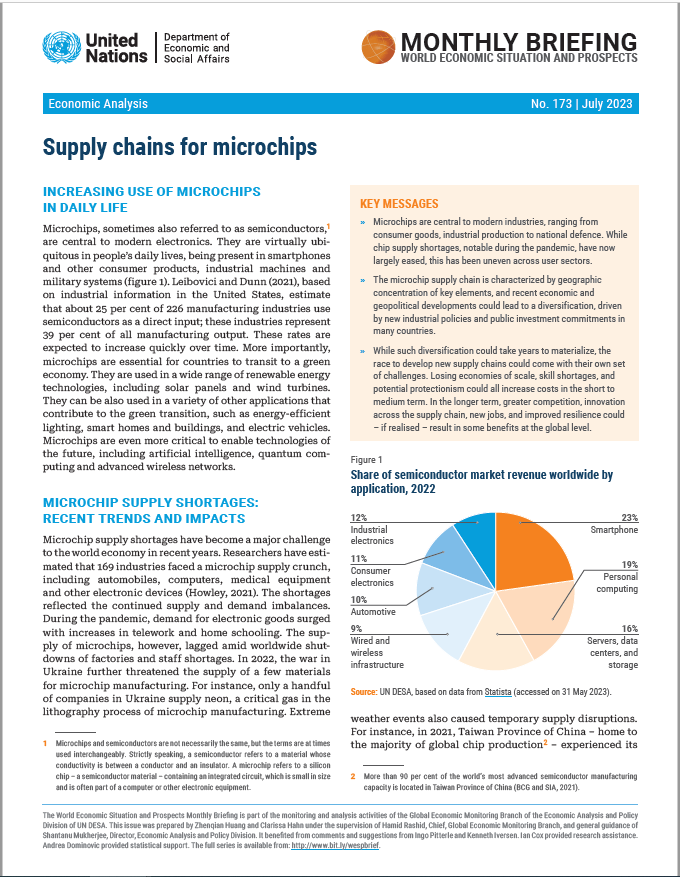
Microchips are central to modern industries, ranging from consumer goods, industrial production to national defence. While chip supply shortages, notable during the pandemic, have now largely eased, this has been uneven across user sectors.
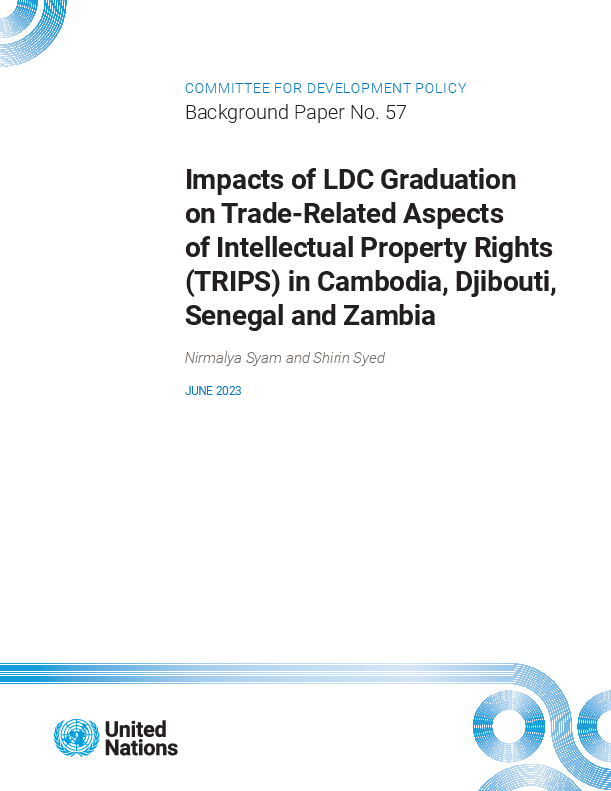
This study analyses the policy and developmental implications, for Cambodia, Djibouti, Senegal and Zambia, of losing access to the LDC-specific provisions of the TRIPS Agreement
 Welcome to the United Nations