 Welcome to the United Nations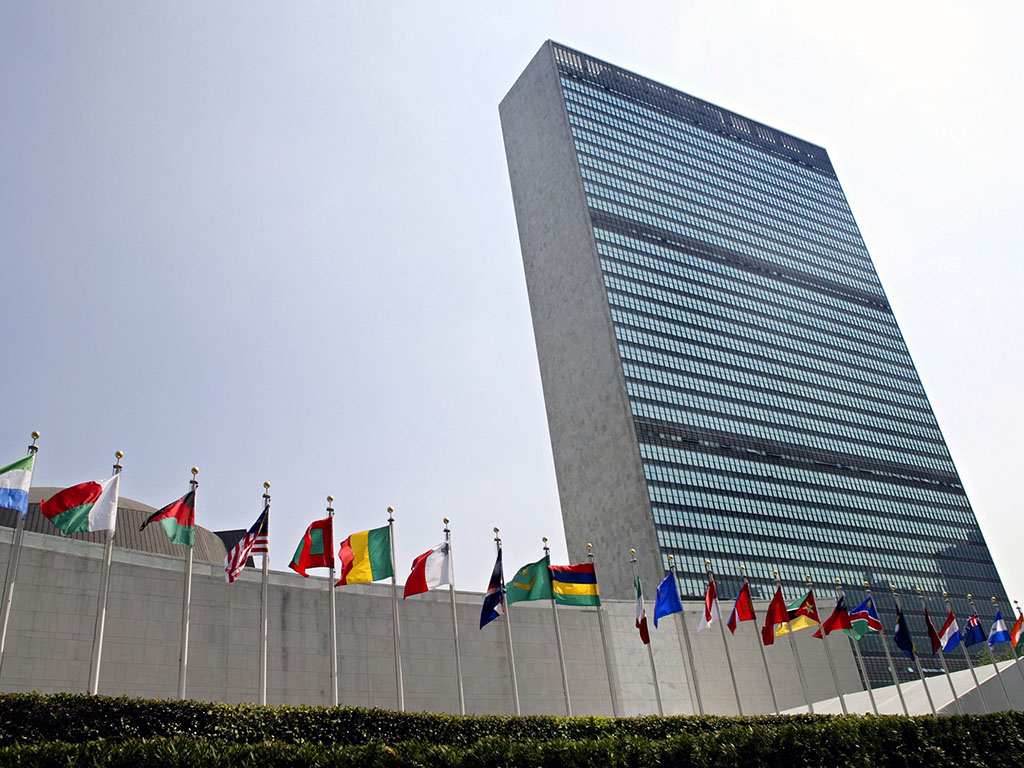
The Development Research Branch (DRB) organized a seminar on emerging opportunities and challenges for data scientists in using big data. Prof. Xiao-Li Meng of Harvard University, founding editor-in-chief of Harvard Data Science Review, spoke about the trade-offs data scientists face in dealing with the expanding universe of data.

-
Department of Economic and Social Affairs
Economic Analysis
Development Research Branch (DRB)

Speakers emphasized that the SDGs demand an integrated approach at all levels as no domestic policy can be detached from the regional and global environment in which it operates, and stressed that LDCs, LLDCs, and SIDs remain the most vulnerable to these interlinkages and global challenges, such as climate change.
The Development Research Branch, in partnership with Columbia University Graduate School of Arts and Sciences, hosted a unique Development Policy Seminar featuring the inaugural Ivy three-minute thesis competition in New York. Dubbed as IVY3MT2019, the event provided a platform to 14 PhD candidates from Brown University, Columbia University, Cornell University, Dartmouth College, Princeton University, University of Pennsylvania and Yale University to present their PhD dissertation ideas and key messages in 3 minutes, using only one slide.
The Development Research Branch (DRB) organized a Development Policy Seminar to present the key findings of the World Economic and Social Survey 2018 to a group of Columbia University PhD candidates. The presentation by the DRB team was followed by a Q&A session during which the participants exchanged views on the process of preparing the Survey, including the identification of the topic, compilation of research data, collaboration with other United Nations entities and outreach.
Summary: In June 2017, the Fed raised its key policy rate for the fourth time s
The 2030 Agenda has set the of goal universal access to electricity by 2030. The challenge is significant. It involves reaching population with limited incomes, often living in sparsely populated areas, mostly in developing and least developed countries. Costs can tally. Taking into account local characteristics, this model finds the combination of technologies that can provide universal access to the population of every country at the lowest cost.
Professor Willi Semmler of The New School and co-editor of the Oxford Handbook of the Macroeconomics of Global Warming was the keynote speaker at the Development Policy Seminar on “A Macroeconomic Framework for Climate Investment with Implications for Structural Change and Employment” held today in New York.
UN DESA | Development Policy and Analysis Divison
Peace and Stability as Enablers for and Outcome of Development
Pingfan Hong