Publications

Displaying 441 - 450 of 1088
This paper examines the process of building productive capacity in Ethiopia over the past two decades and the roles played by the state, government, the private sector, foreign firms and development partners. Productive capacity is defined broadly as the natural resource potential, accumulation of human capital and the institutions that facilitate inclusive and sustainable economic growth. This process also encompasses the nurturing modern entrepreneurial skills in the private sector and fostering innovation. The paper starts with an overview of Ethiopia's economic growth and the change in the domestic economic structure. The manufacturing sector is seen as the success of Ethiopia's Growth…
The 19th session was held from 20-24 March at UN Headquarters in New York
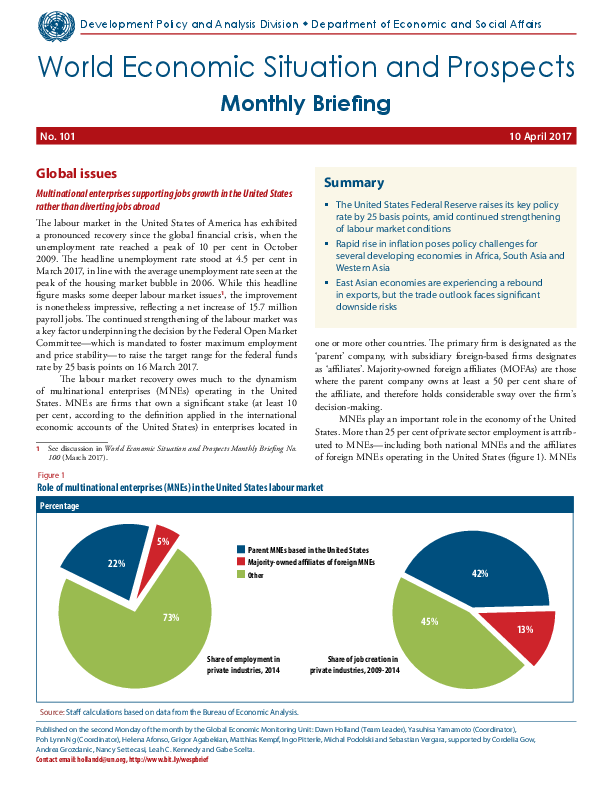
The United States Federal Reserve raises its key policy rate by 25 basis points, amid continued strengthening of labour market conditions
Rapid rise in inflation poses policy challenges for several developing economies in Africa, South Asia and Western Asia
East Asian economies are experiencing a rebound in exports, but the trade outlook faces significant downside risks
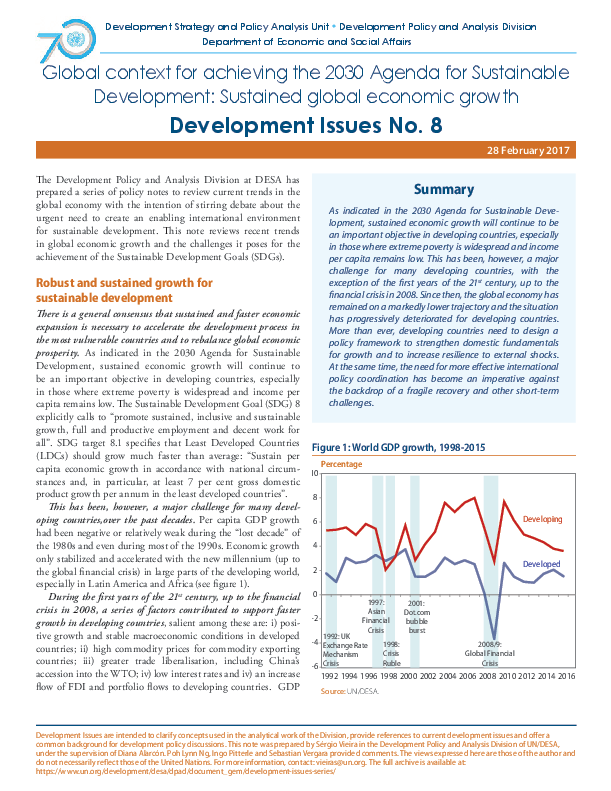
A review of recent trends suggests the need for a renewed commitment and enhanced efforts by the international community to support financing for sustainable development. It also points out at potential risks of debt sustainability for a few developed and some emerging economies.
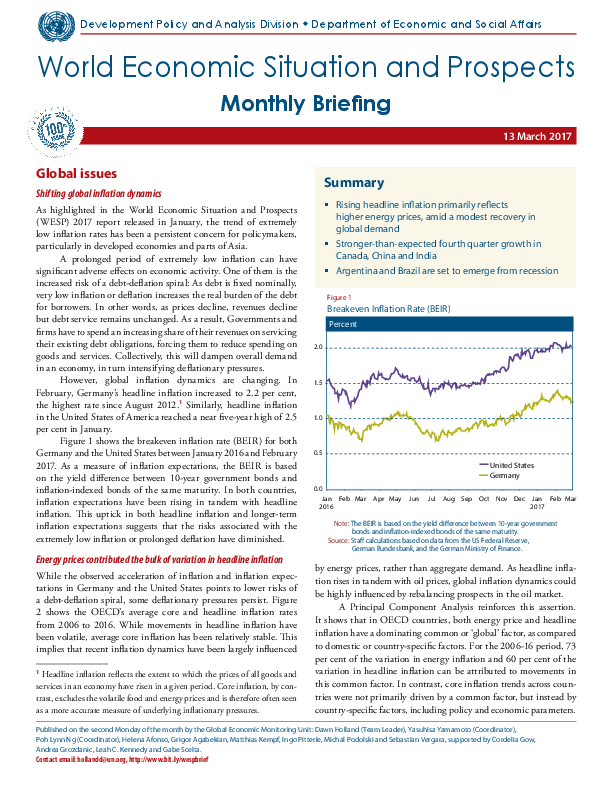
Rising headline inflation primarily reflects higher energy prices, amid a modest recovery in global demand
Stronger-than-expected fourth quarter growth in Canada, China and India
Argentina and Brazil are set to emerge from recession
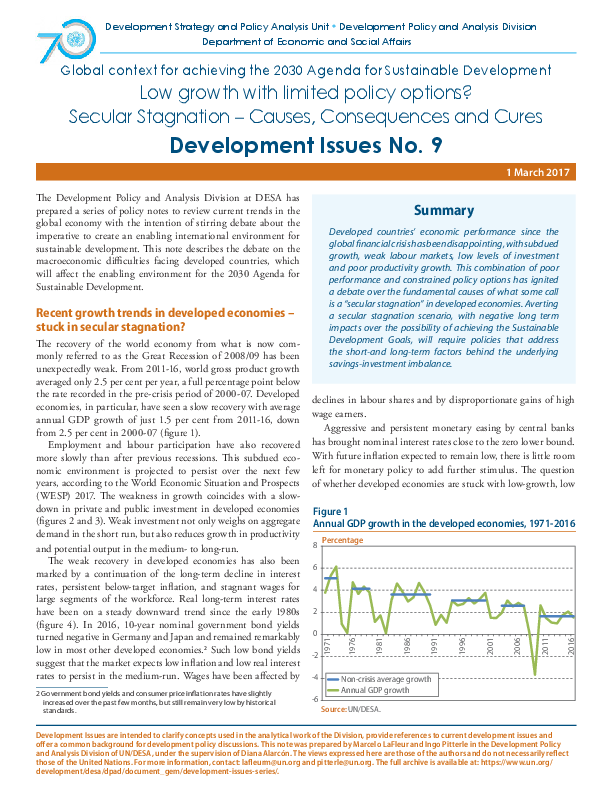
The global economy remains trapped in prolonged episode of slow growth, of which weak international trade is both a cause and a symptom. While developing countries have become more integrated and benefitted from international trade in recent years, this has also made them more vulnerable to a slowdown in global trade. Ensuring an enabling global environment for trade is thus critical for progress towards the Sustainable Development Goals, in particular given the risks associated with protectionism and inward-looking policies, which is on the rise in many countries.