 Welcome to the United Nations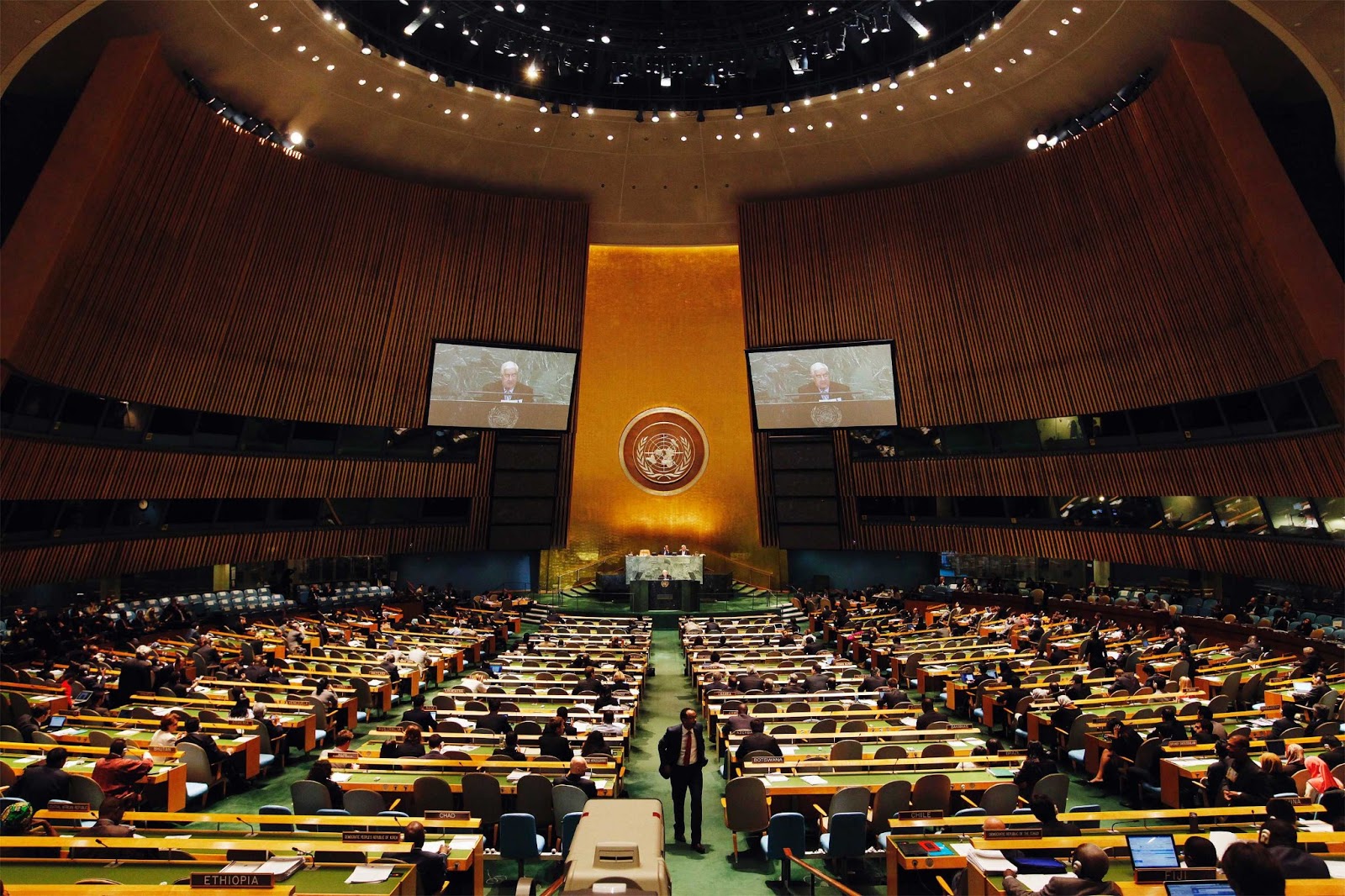
The 2015 Report of the MDG Gap Task Force was launched today in New York by Secretary-General Ban Ki-moon, Under-Secretary-General for Economic and Social Affairs Wu Hongbo and UNDP Administrator Helen Clark. The Task Force was created in 2007 to monitor Millennium Development Goal 8, Global Partnership for Development, specifically its five core domains, official development assistance (ODA), market access (trade), debt sustainability, access to affordable essential medicines and access to new technologies. This year marks the last of the series of this monitoring process with a closing report tracking 15 years of progress. As has been reported, there have been significant positive developments pointing to an effective international partnership in the five domains, but several deficits in development cooperation have continuously highlighted the need for a rejuvenation of the global partnership for development.

-
Department of Economic and Social Affairs
Economic Analysis
SDG #8: Decent work and economic growth
Download the World Economic Situation and Prospec
Presentations at the workshop on trade and LDCs organized by the CDP Secretariat, Geneva, 3-6 November, 2015
Productive capacity
The mid-year update of the World Economic Situation and Prospects forecasts growth of world gross product to accelerate slightly from 2.6 per cent in 2014 to 2.8 per cent in 2015?a downward revision by 0.3 percentage points from the forecast presented in the World Economic Situation and Prospects 2015 in January. In 2016, global growth is forecast to improve to 3.1 per cent. The report was launched today in New York by Pingfan Hong, Director of the Development Policy and Analysis Division (DPAD), UN/DESA; and Ingo Pitterle, Economic Affairs Officer, DPAD/DESA.
Peace and Stability as Enablers for and Outcome of Development
Pingfan Hong
Committee for Development Policy,?Report on the seventeenth session?(23-27 March 2015) (E/2015/33)
????,?
In a Development Policy Seminar held in New York yesterday, Nicolas V?ron, Senior Fellow at Bruegel in Brussels and Visiting Fellow from the Peterson Institute for International Economics, argued that the effectiveness of post-crisis reforms in financial regulation in making global finance more stable is not so far proven. In his presentation, he showed that unintended consequences of the reforms are appearing gradually, even as their initial implementation is still unfinished. In his view, the G20 has established neither an adequate institutional infrastructure nor a consistent policy vision for a globally integrated financial system. This shortcoming justifies increasing concerns about economically harmful market fragmentation. One key aim, according to V?ron, should be to make international regulatory bodies more representative of the rapidly-changing geography of global finance, not only in terms of their membership but also of their leadership and location.