Displaying 1 - 10 of 54
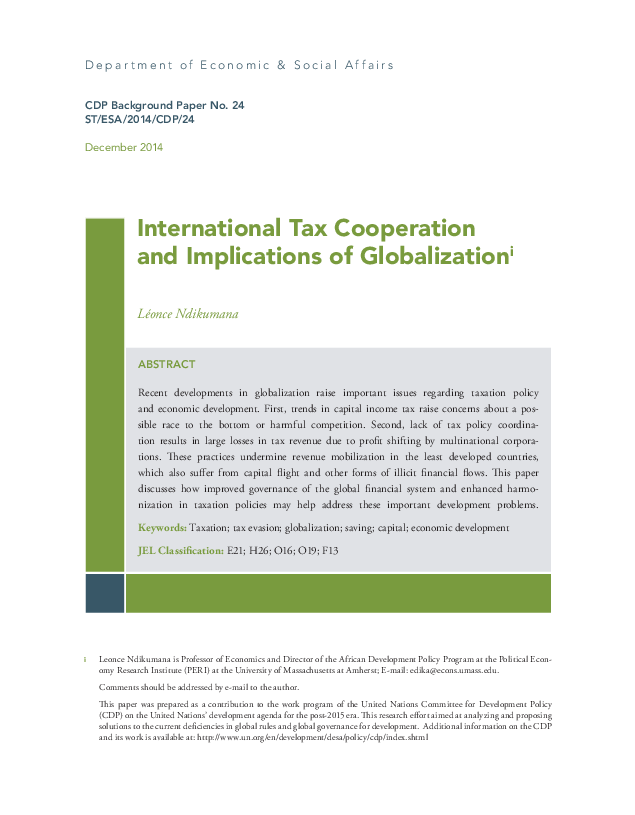
Recent developments in globalization raise important issues regarding taxation policy and economic development. First, trends in capital income tax raise concerns about a possible race to the bottom or harmful competition. Second, lack of tax policy coordination results in large losses in tax revenue due to profit shifting by multinational corporations. These practices undermine revenue mobilization in the least developed countries, which also suffer from capital flight and other forms of illicit financial flows. This paper discusses how improved governance of the global financial system and enhanced harmonization in taxation policies may help address these important development problems.
Presentations at the national workshop on Graduation from the LDC category, 9-10 December 2014, Nay Pyi Taw, Myanmar
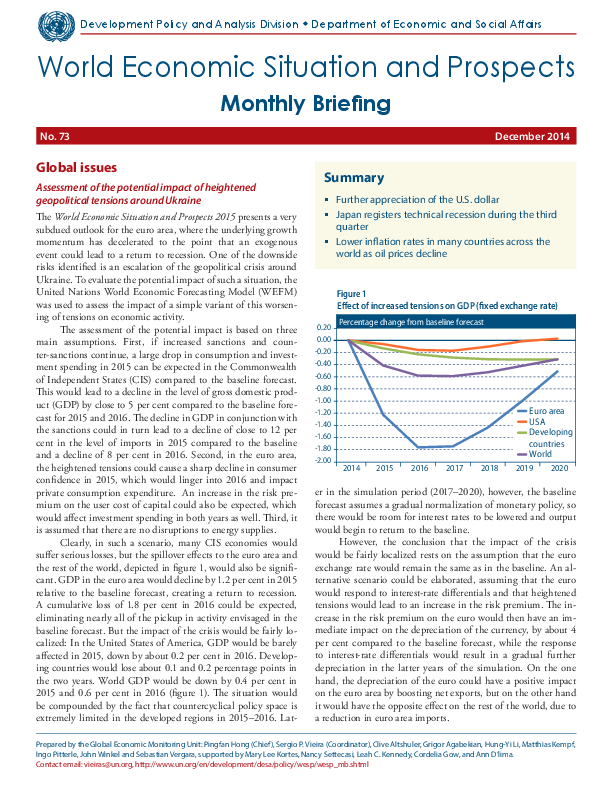
Download the World Economic Situation and Prospects Monthly Briefing No. 73
December 2014 Summary ?? Further appreciation of the U.S. dollar
Japan registers technical recession during the third quarter
Lower
Nepal was the first Least Developed Country to negotiate its accession to the World Trade Organization. The negotiation process was demanding, yet it succeeded in securing a relatively well-balanced accession package. The purpose of this paper is to describe the contours of the negotiation process and to share lessons learned. The paper details the onerous process involved in the accession of LDCs to the WTO and describes the context of Nepal's negotiating positions. Some distinctive aspects of Nepal's approach to the process of accession are highlighted and compared with the situation of some other LDCs.
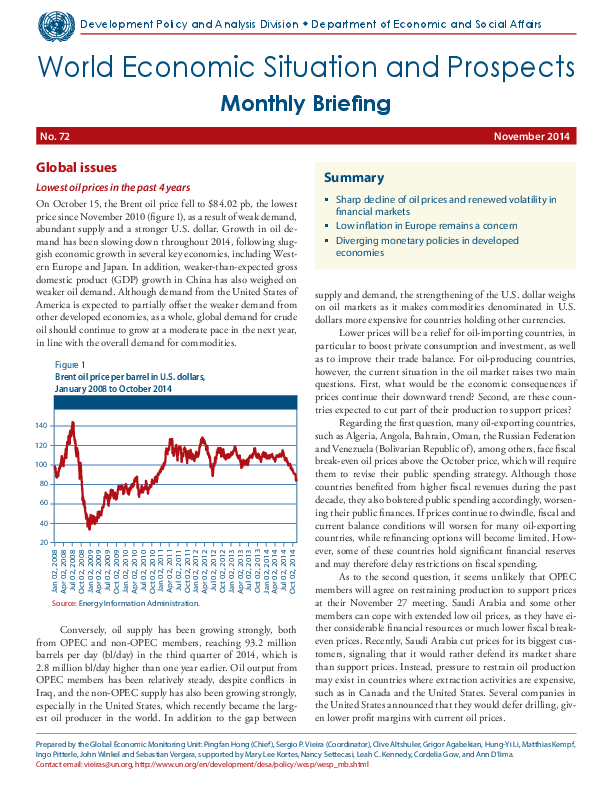
Sharp decline of oil prices and renewed volatility in financial markets
Low inflation in Europe remains a concern
Diverging monetary policies in developed economies
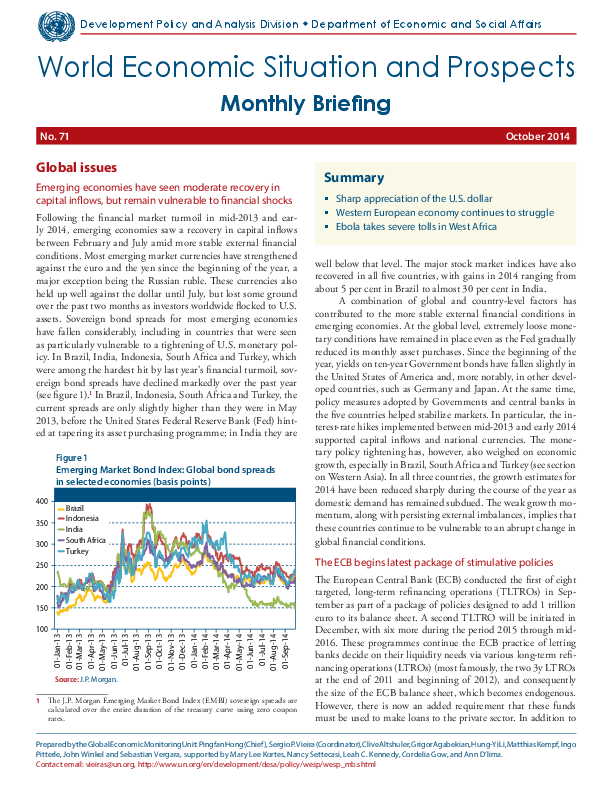
Sharp appreciation of the U.S. dollar
Western European economy continues to struggle
Ebola takes severe tolls in West Africa
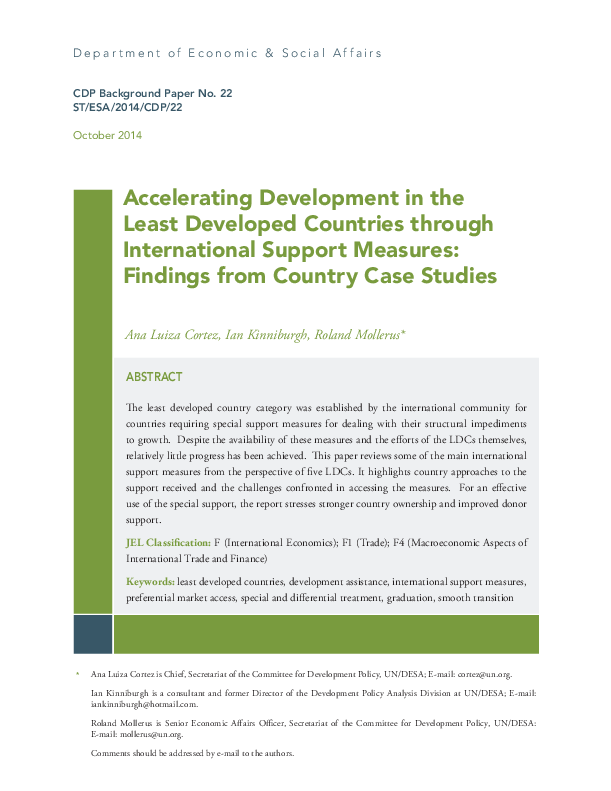
The least developed country category was established by the international community for countries requiring special support measures for dealing with their structural impediments to growth. Despite the availability of these measures and the efforts of the LDCs themselves, relatively little progress has been achieved. This paper reviews some of the main international support measures from the perspective of five LDCs. It highlights country approaches to the support received and the challenges confronted in accessing the measures. For an effective use of the special support, the report stresses stronger country ownership and improved donor support.
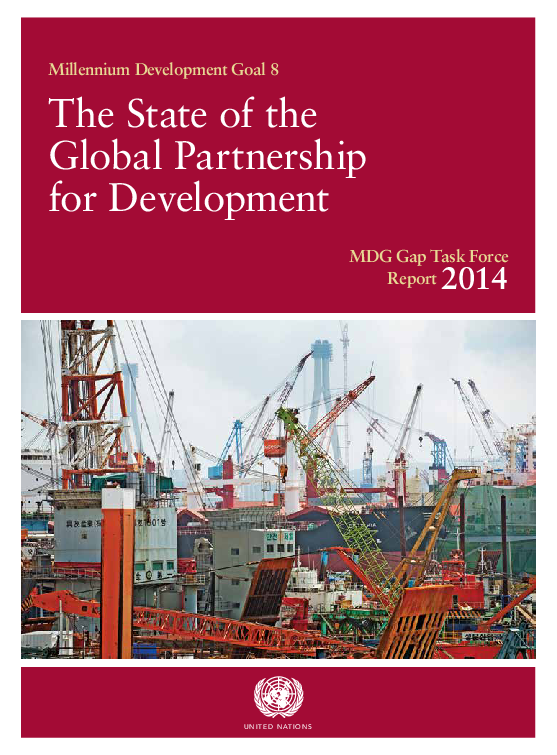
The State of the Global Partnership for Development: In its latest report, the MDG Gap Task Force found much progress towards achieving the goals set under MDG 8.
2014
Report on the sixteenth session of the Committee for Development Policy, 24-28 March, 2014 (E/2014/33, Supplement No. 13)
A number of official resolutions and decisions related to the work of the Committee for Development Policy are issued on a regular basis. These documents are in response to the Committee's programme of work on themes dealt with by the Council, as