Institutions and regulators could consider investing in requisite resources and building capacities in deploying sandboxes and experiments, with the medium- and long-term aims to advance agile, responsive and resilient approaches in adopting new technologies and in preparing for the future of digital government and sustainable development.
Favourable terms of trade provide much needed policy room to combat the pandemic and advance transformative reforms that can sustainably reduce poverty and inequality.
To address the existing barriers to the adoption of these technologies, it is important to invest in digital literacy in rural areas, establish a new generation of agricultural extension services, make digital platforms user-friendly for smallholder farmers and build up infrastructure for agricultural e-commerce.
The COVID-19 pandemic has posed new demands on development cooperation in its various forms: finance, capacity support, policy change and multi-stakeholder partnerships. The ongoing challenge of the pandemic and its consequences has also shown the durability and adaptability of development cooperation.
The third Forum, held in Bern, Switzerland, in October 2021 brought together over 700 participants in person and over 7,000 virtually, representing a diverse group of stakeholders from the data and statistics community, joining from over 180 countries around the world. The Forum discussions stressed the need for greater collaboration and coordination for inclusive data to leave no one behind; increase financial support; enhance the capacities of National Statistical Offices; and promote greater inclusion of, and access by, marginalised communities.
This new edition contains updates to LDC criteria and procedures and new information on smooth transition provisions for countries graduating from the LDC category and is available in English, French and Portuguese
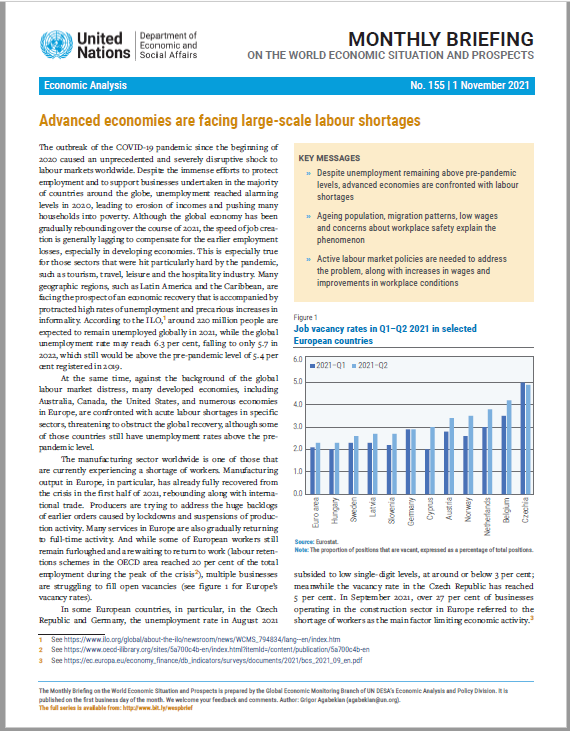
Despite unemployment remaining above pre-pandemic levels, advanced economies are confronted with labour shortages. Ageing population, migration patterns, low wages and concerns about workplace safety explain the phenomenon.
Development strategies that focus solely on urban development and leave rural communities behind are not adequate to overcome the development challenges we face.
 Welcome to the United Nations