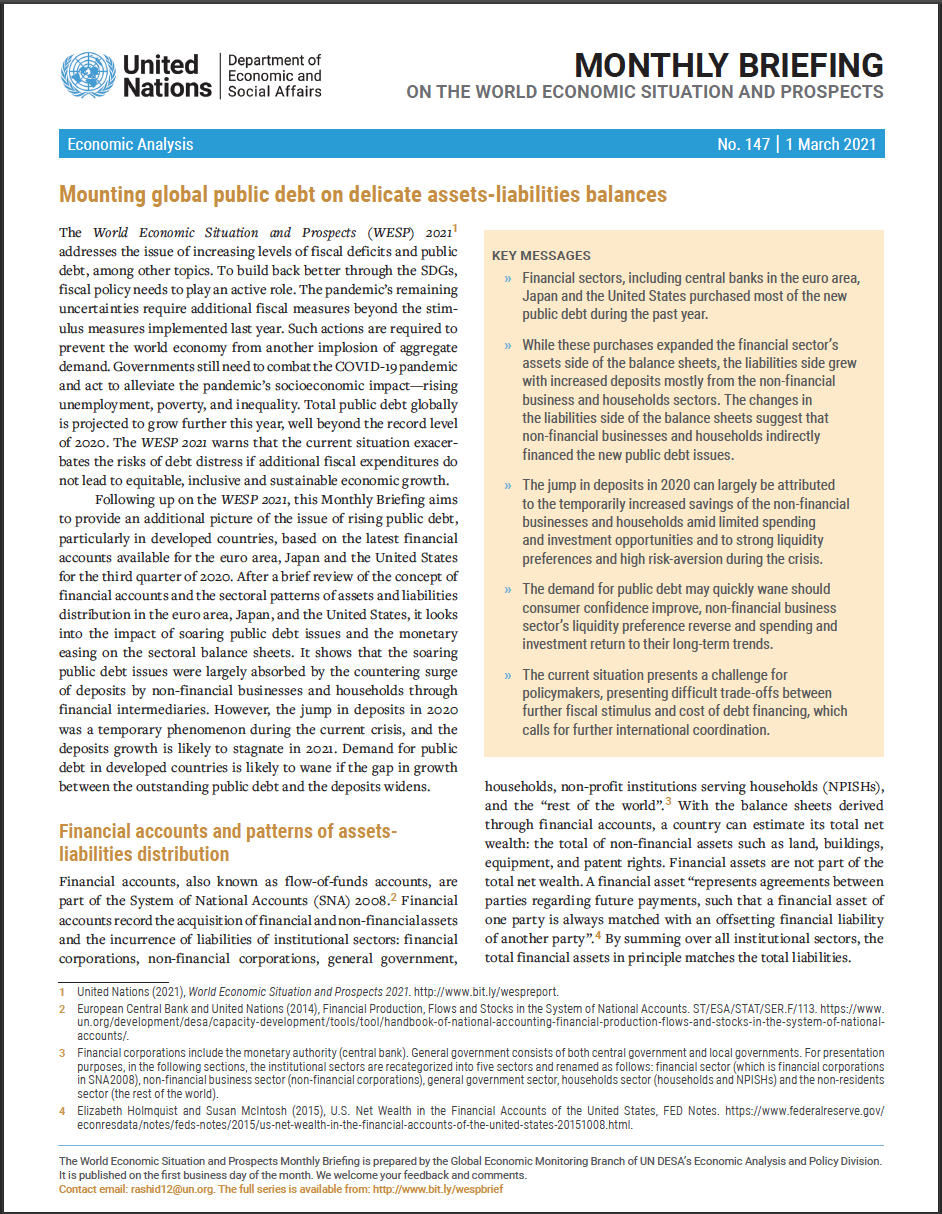
The jump in deposits in 2020 can largely be attributed to the temporarily increased savings of the non-financial businesses and households amid limited spending and investment opportunities and to strong liquidity preferences and high risk-aversion during the crisis.
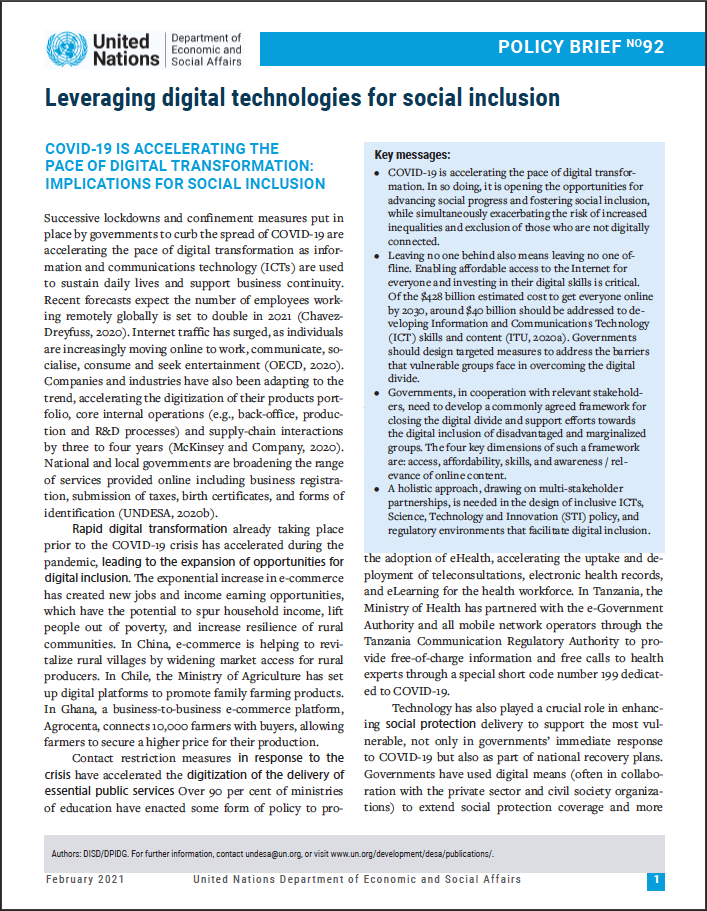
COVID-19 is accelerating the pace of digital transformation. In so doing, it is opening the opportunities for advancing social progress and fostering social inclusion, while simultaneously exacerbating the risk of increased inequalities and exclusion of those who are not digitally connected.
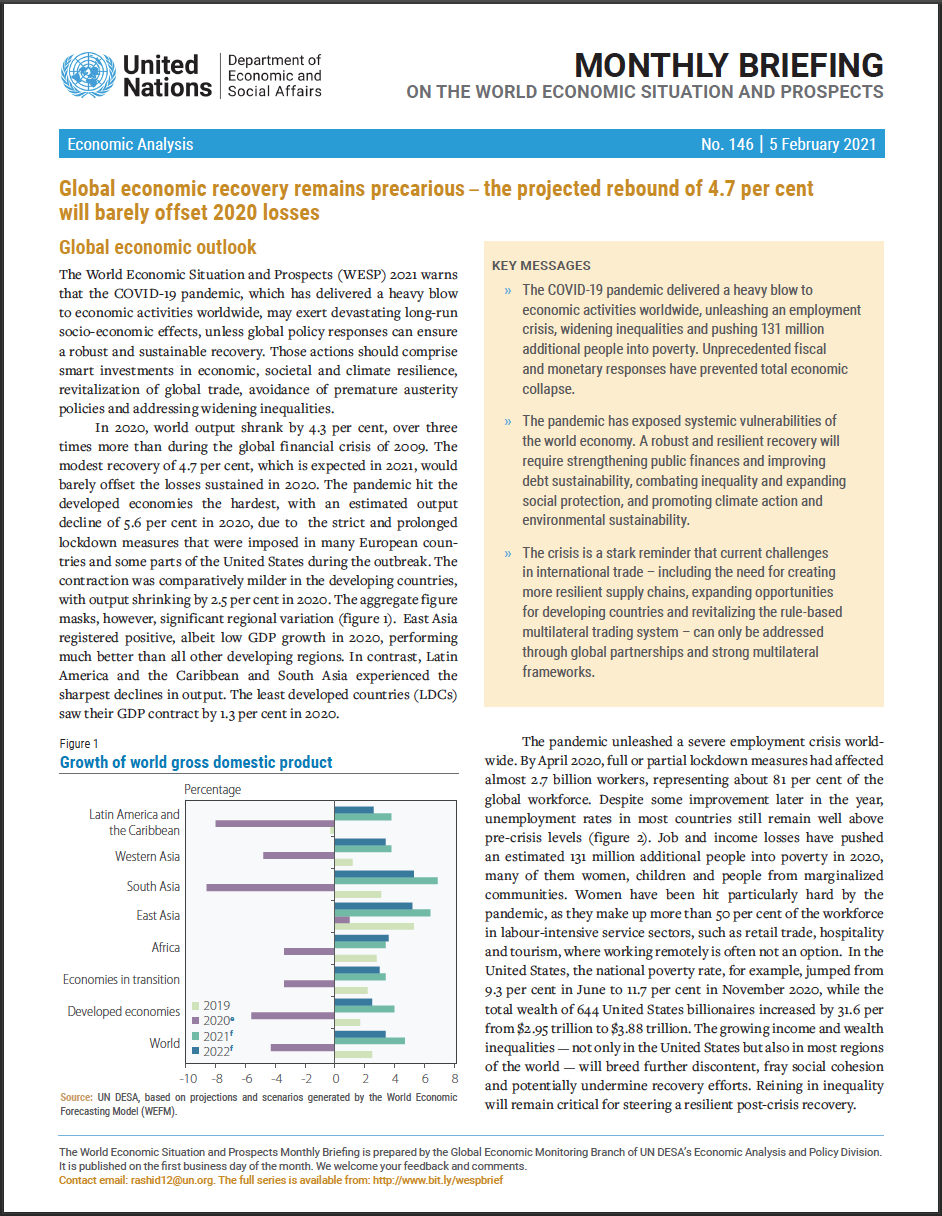
The pandemic has exposed systemic vulnerabilities of the world economy. A robust and resilient recovery will require strengthening public finances and improving debt sustainability, combating inequality and expanding social protection, and promoting climate action and environmental sustainability.
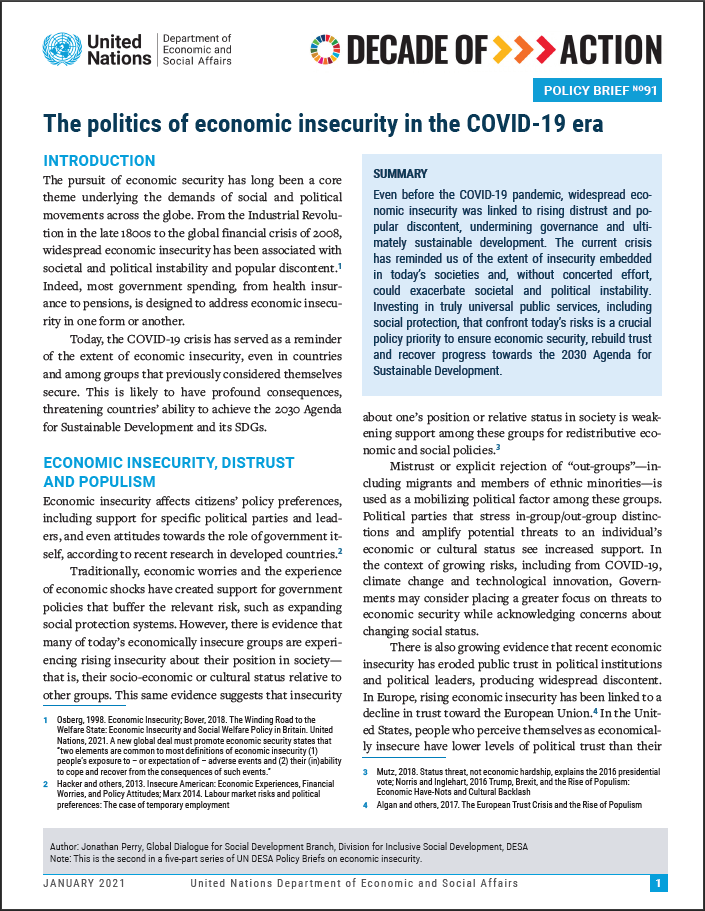
The COVID-19 crisis has served as a reminder of the extent of economic insecurity, even in countries and among groups that previously considered themselves secure. This is likely to have profound consequences, threatening countries? ability to achieve the 2030 Agenda for Sustainable Development and its SDGs.
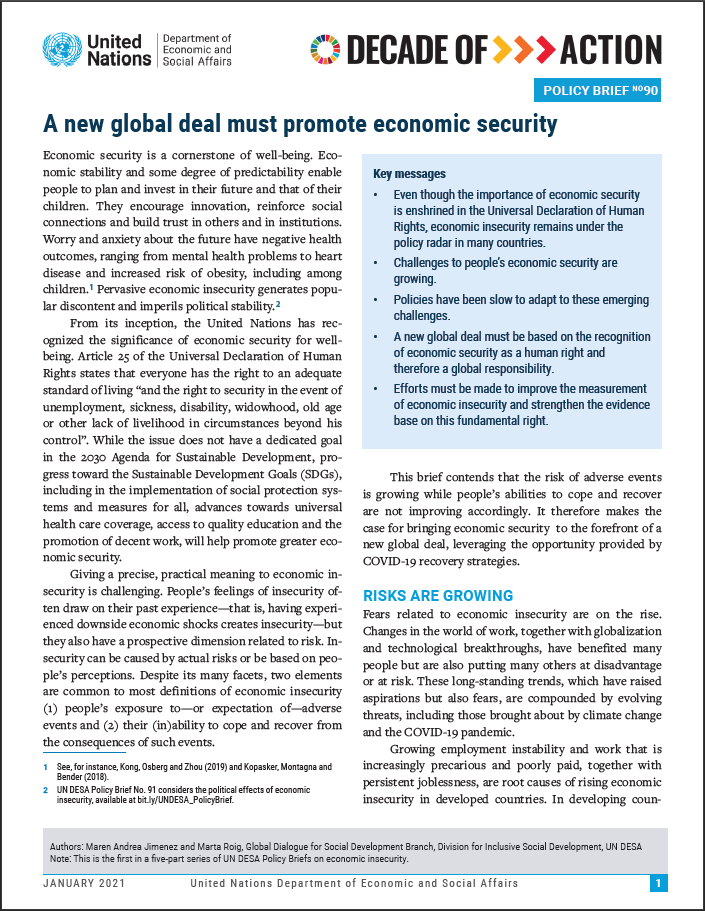
Fears related to economic insecurity are on the rise. Changes in the world of work, together with globalization and technological breakthroughs, have benefited many people but are also putting many others at disadvantage or at risk. These long-standing trends, which have raised aspirations but also fears, are compounded by evolving threats, including those brought about by climate change and the COVID-19 pandemic.
The pandemic reached every corner of the world, infecting more than 90 million and, so far, has killed close to 2 million people worldwide. The crisis responses, however, entailed difficult choices between saving lives and saving livelihoods, between speed of delivery and efficiency, and between short-term costs and long-term impacts.
 Welcome to the United Nations