2006
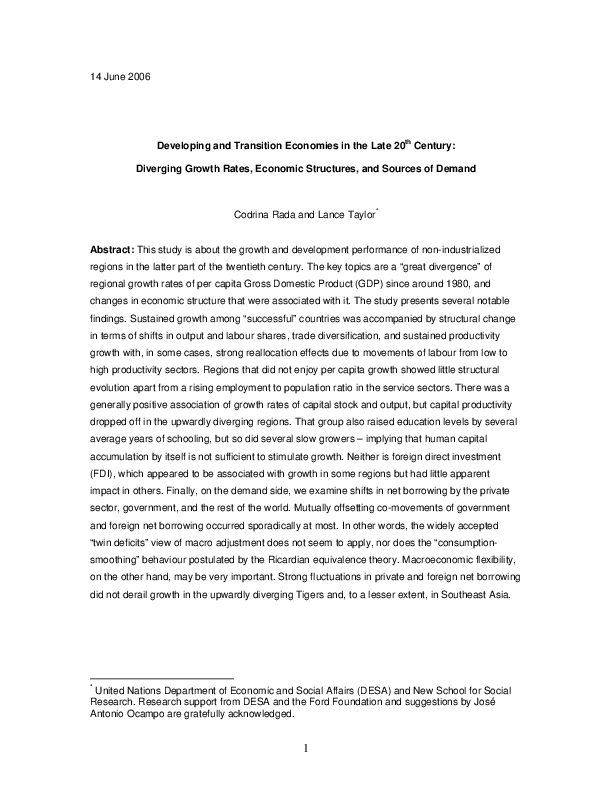
Developing and Transition Economies in the Late 20th Century: Diverging Growth Rates, Economic Structures,
and Sources of Demand
Codrina Rada and Lance Taylor
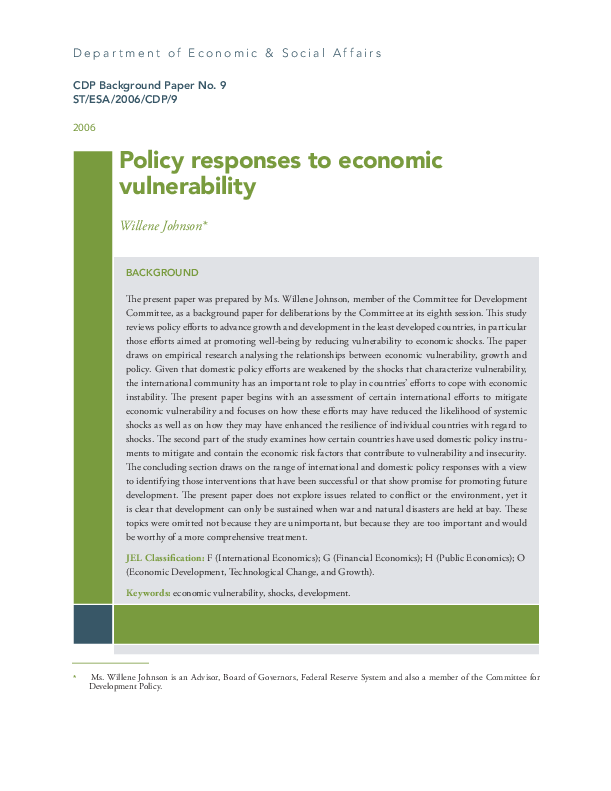
The present paper reviews policy efforts to advance growth and development in the least developed countries, in particular those efforts aimed at promoting well-being by reducing vulnerability to economic shocks. The paper draws on empirical research analysing the relationships between economic vulnerability, growth and policy. Given that domestic policy efforts are weakened by the shocks that characterize vulnerability, the international community has an important role to play in countries.
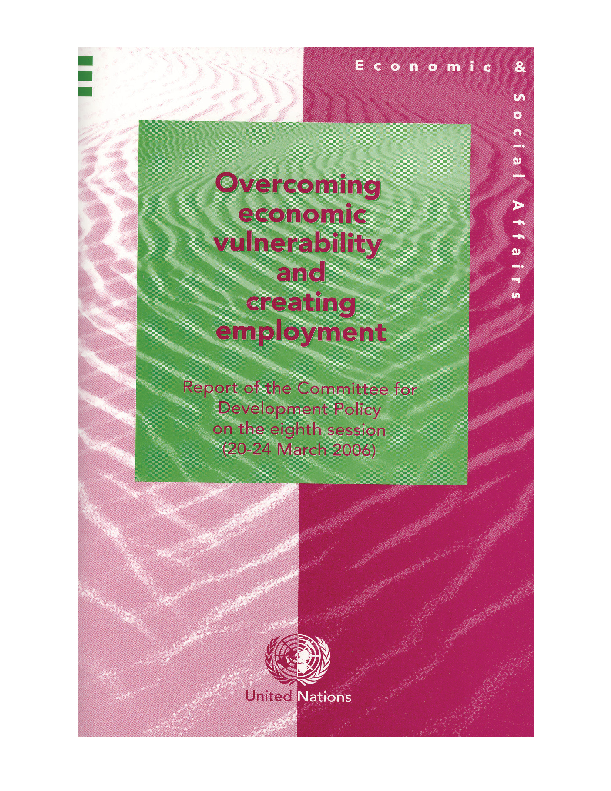
The publication addresses two themes. The first is unemployment in developing countries. Tackling this problem requires a more balanced and coordinated international strategy for sustainable global growth. At the national level, economic growth is important, but the quality of such growth also matters. It is also necessary to create fiscal space to ensure the availability of a skilled workforce that can meet the technological challenges posed by globalization. The second theme is that of economic vulnerability and instability. Required domestic policy measures include the promotion of good governance, sound fiscal and financial management and enhanced human and social development. The…
The world economy is expected to continue to grow at a rate of 3 per cent during 2006. The United States economy remains the main engine of global economic growth, but the growth of China, India and a few other large developing economies is becoming
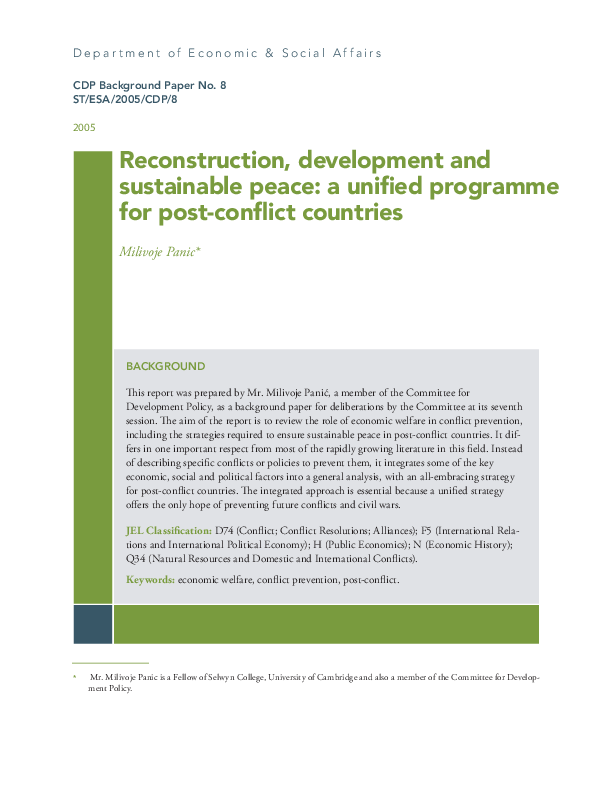
The aim of the report is to review the role of economic welfare in conflict prevention, including the strategies required to ensure sustainable peace in post-conflict countries. It differs in one important respect from most of the rapidly growing literature in this field. Instead of describing specific conflicts or policies to prevent them, it integrates some of the key economic, social and political factors into a general analysis, with an all-embracing strategy for post-conflict countries. The integrated approach is essential because a unified strategy offers the only hope of preventing future conflicts and civil wars.
 Welcome to the United Nations