Publications

Displaying 431 - 440 of 1088
This paper analyzes the advantages that LDCs have derived from the various LDC-specific international support measures due to their LDC status. It identifies the reasons why some UN development system organizations may not use the LDC category in their allocation of development assistance and support measures.The analysis focuses on support from the UNDS organizations related to ODA and general support measures. Trade related support measures fall under the purview of the World Trade Organization, and are not discussed in this paper. The analysis was undertaken in the context of a UN General Assembly mandate in response to the Mid-term Review of the Implementation of the Istanbul Programme…
The mid-year update of the World Economic Situation and Prospects 2017 confirms the projections made in January 2017 of a modest recovery in global growth for 2017-2018. Helped by a moderate recovery in trade and investment, world gross product is expected to expand by 2.7% in 2017 and 2.9% in 2018. While this marks a notable acceleration compared to 2016, growth in many regions remains below the levels needed for rapid progress towards achieving the Sustainable Development Goals.
Committee for Development Policy,?Report on the nineteenth session?(20-24 March 2017) (E/2017/33)
????,?
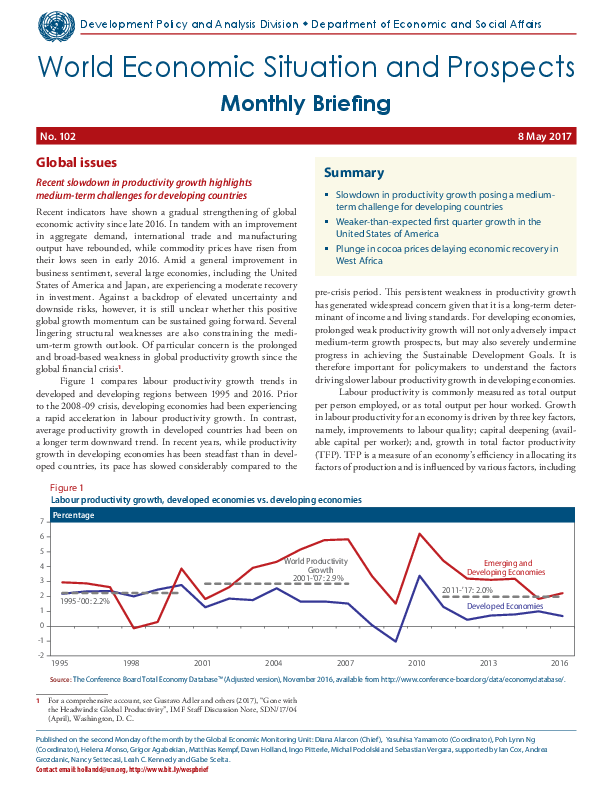
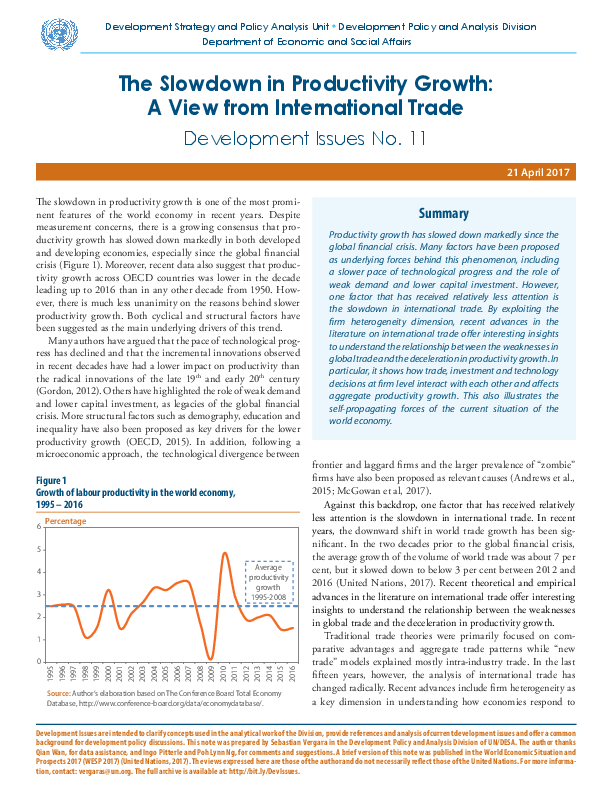
Slowdown in productivity growth posing a medium term challenge for developing countries
Weaker-than-expected first quarter growth in the United States of America
Plunge in cocoa prices delaying economic recovery in West Africa
The United Nations Committee for Development Policy (CDP) comprises 24 independent specialists from a variety of disciplines. It advises the UN Economic and Social Council on emerging economic, social and environmental issues relevant to sustainable development and international co-operation. The paper argues that since its launch in 1965 the CDP has at times struggled to make an impact, but that it has been most effective when it has been at its most creative and when it has broken with convention.
The CDP helped put into practice the target that developed countries should devote 0.7% of their gross national income to official development assistance. The Committee created the least…
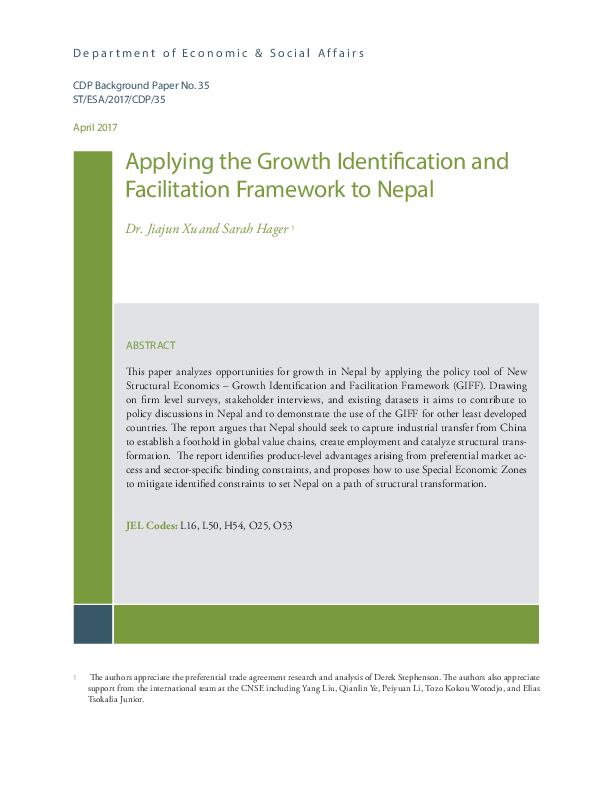
This paper analyzes opportunities for growth in Nepal by applying the policy tool of New Structural Economics ? Growth Identification and Facilitation Framework (GIFF). Drawing on firm level surveys, stakeholder interviews, and existing datasets it aims to contribute to policy discussions in Nepal and to demonstrate the use of the GIFF for other least developed countries. The report argues that Nepal should seek to capture industrial transfer from China to establish a foothold in global value chains, create employment and catalyze structural transformation. The report identifies product-level advantages arising from preferential market access and sector-specific binding constraints, and…
Trade, investment and technology decisions at firm level interact with each other and affects aggregate productivity growth. This also illustrates the self-propagating forces of the current situation of the world economy.
Report of the Committee for Development Policy (E/2017/33, Supplement No. 13)