Publications

Displaying 471 - 480 of 1087
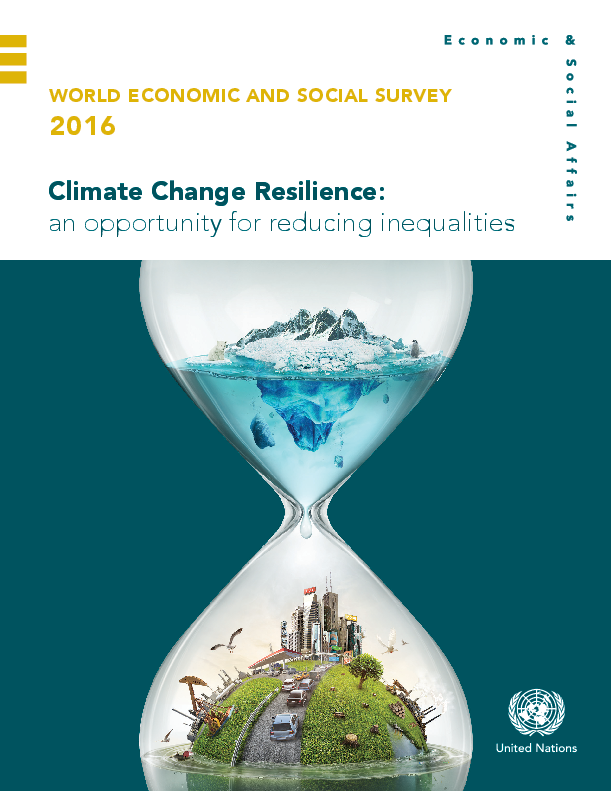
In addressing the specific challenge of building resilience to climate change, the Survey focuses attention on the population groups and communities that are disproportionately affected by climate hazards. It argues that, in the absence of transformative policies which coherently address the economic, social and environmental dimensions of development, building climate resilience will remain elusive and poverty and inequalities will worsen.
On 29 September 2016 the CDP Subgroup on Leaving No One Behind will hold a virtual meeting to discuss development strategies that particularly promote the well-being of the worst off, as a part of the Committee?s multi-year work programme on the them
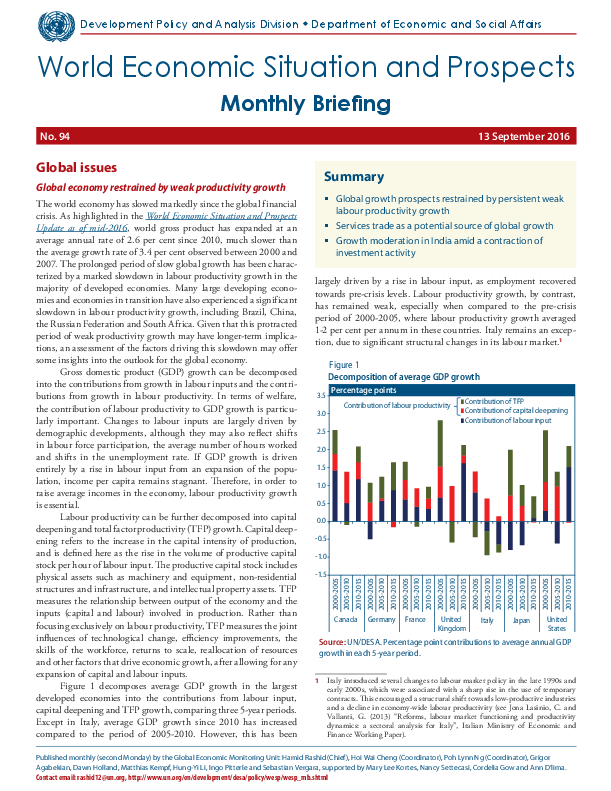
Global growth prospects restrained by persistent weak labour productivity growth
Services trade as a potential source of global growth
Growth moderation in India amid a contraction of investment activity
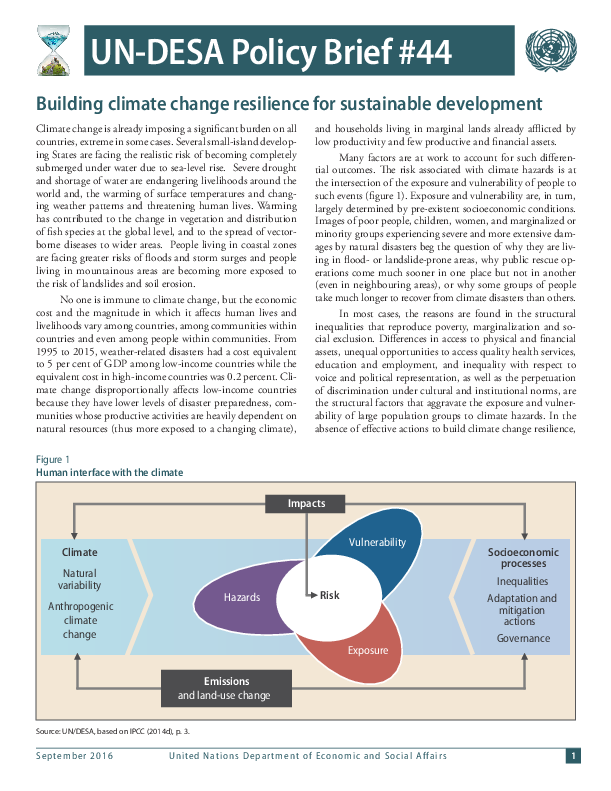
Climate change is already imposing a significant burden on all countries, extreme in some cases. Several small-island developing States are facing the realistic risk of becoming completely submerged under water due to sea-level rise. Severe drought a
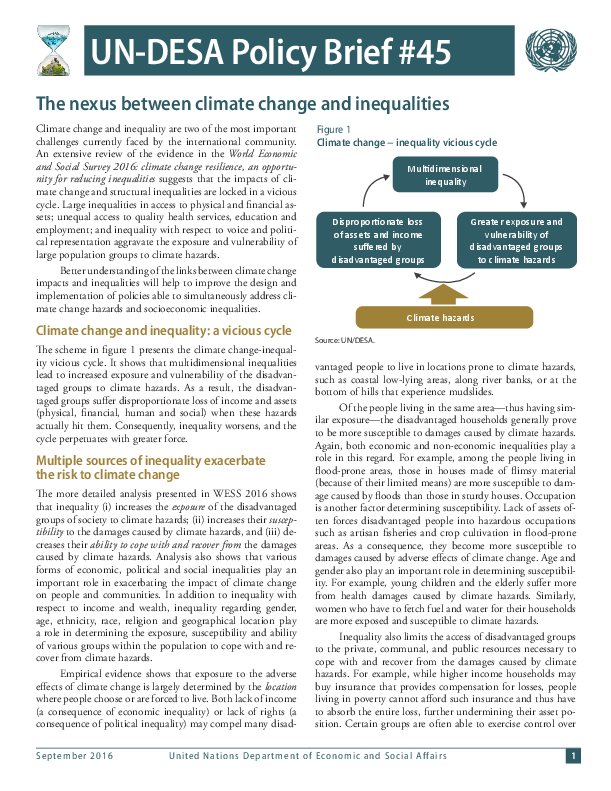
Climate change and inequality are two of the most important challenges currently faced by the international community. An extensive review of the evidence in the World Economic and Social Survey 2016: climate change resilience, an opportunity for
The challenge of addressing diverse environmental concerns in development policy
The intensity and frequency of climate hazards have increased with climate change, imposing large costs on societies. Building resilience to withstand climate h
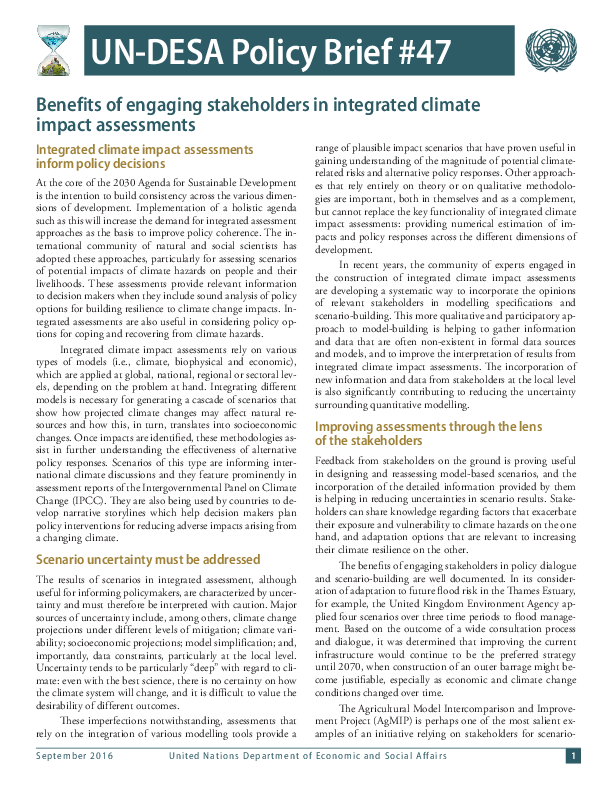
Integrated climate impact assessments inform policy decisions
At the core of the 2030 Agenda for Sustainable Development is the intention to build consistency across the various dimensions of development. Implementation of a holistic agenda
Climate change has a differential impact on people and communities. The people at greatest risk are the poor, the vulnerable and the marginalized that, in most cases, have been excluded from socioeconomic progress. Differences in wealth; unequal oppo
Identifying the population groups at greatest risk due to climate-related events, understanding the specific risks they incur, and monitoring the interventions to reduce their vulnerability requires basic indicators on populations in vulnerable zones
In the past 20 years, weather-related disasters affected 4.2 billion people worldwide, with a large loss of life and livelihoods. The global annual average cost of climatic disasters, including floods, storms, droughts and heat waves, is estimated to