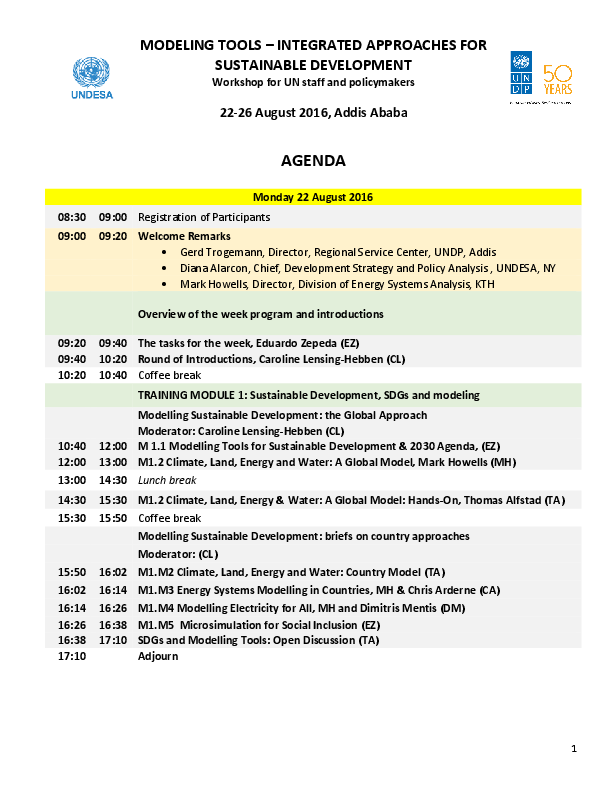
DESA/DPAD in partnership with UNDP launched an initiative to develop a training course aimed at strengthening the science-policy interface to inform sustainable development strategies; raise capacity to establish the inter-linkages across the three d
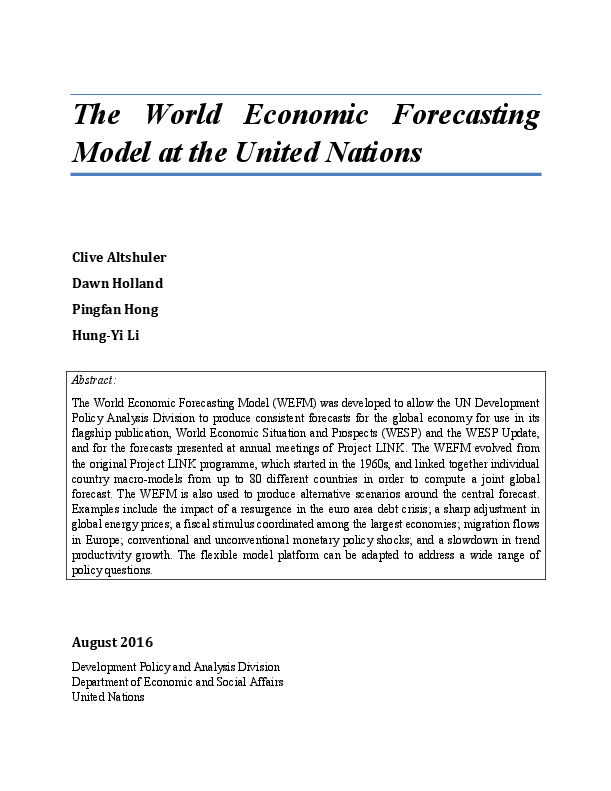
Examples include the impact of a resurgence in the euro area debt crisis; a sharp adjustment in global energy prices; a fiscal stimulus coordinated among the largest economies; migration flows in Europe; conventional and unconventional monetary policy shocks; and a slowdown in trend productivity growth. The flexible model platform can be adapted to address a wide range of policy questions.
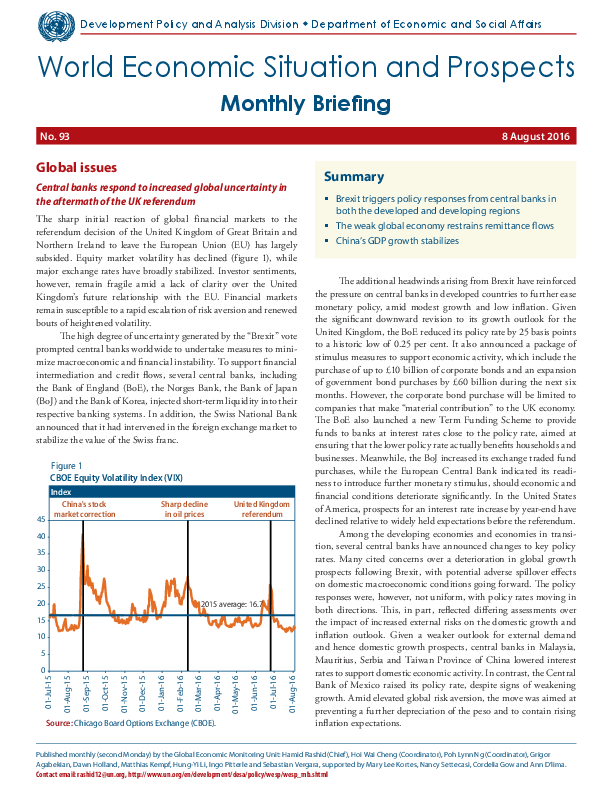
? Brexit triggers policy responses from central banks in both the developed and developing regions
? The weak global economy restrains remittance flows
? China?s GDP growth stabilizes
?
On 21 July 2016 the Committee for Development Policy (CDP) and OECD co-hosted a High-Level Panel discussion during the United Nations Development Cooperation Forum on the Future Measurement and Monitoring Framework for Development Finance in support
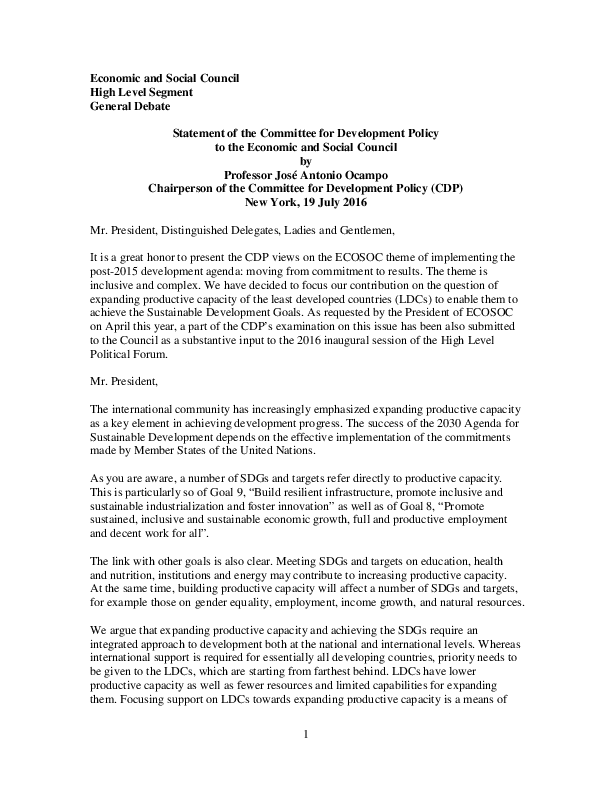
Statement by Prof. Jos? Antonio Ocampo, the Chairperson of the CDP, at the High Level Segment of 2016 ECOSOC session, 19 July 2016
https://www.youtube.com/watch?v=aCturRfsadM
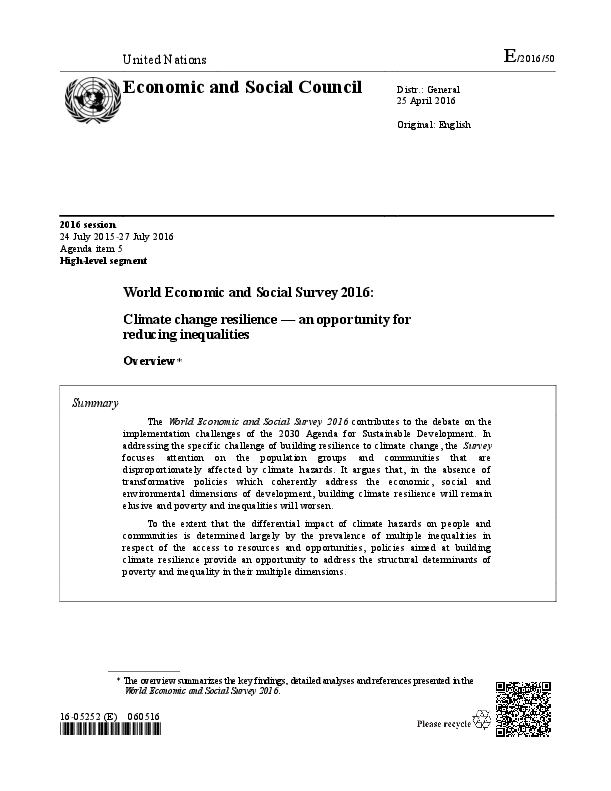
The World Economic and Social Survey 2016 contributes to the debate on the implementation challenges of the 2030 Agenda for Sustainable Development.
In addressing the specific challenge of building resilience to climate change, the Survey focuses at
Updated?overview of the major international economic and policy?challenges for equitable and inclusive sustained economic?growth and sustainable development, and of the role of the?United Nations in addressing these issues in the light of
On 19 July 2016 Professor Jose Antonia Ocampo, Chair of the Committee for Development Policy (CDP), introduced the Committee's findings on "Expanding productive capacity of least developed countries (LDCs) for achieving the sustainable developement g