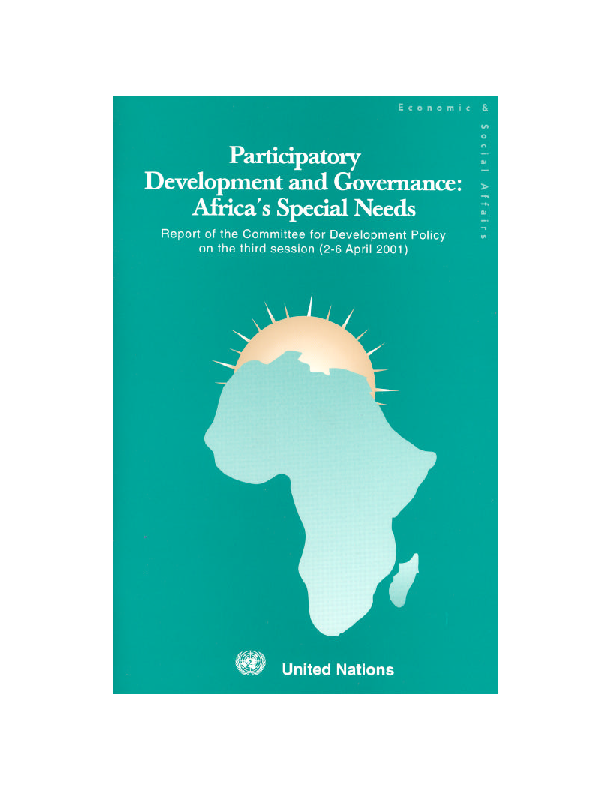
Africa needs to take control over its own development strategy through a participatory and coordinated approach that involves a more effective mobilization and use of domestic financial and non-financial resources, the development of innovative and dynamic partnerships, and improved governance at both the national and multilateral levels. Better governance requires enhanced transparency, sound management of resources and a stable economic and regulatory environment.Recommendations on how to enhance the effectiveness of the UN system and multilateral institutions to support participatory development in Africa are discussed. These include the need to address coordination failures and the…
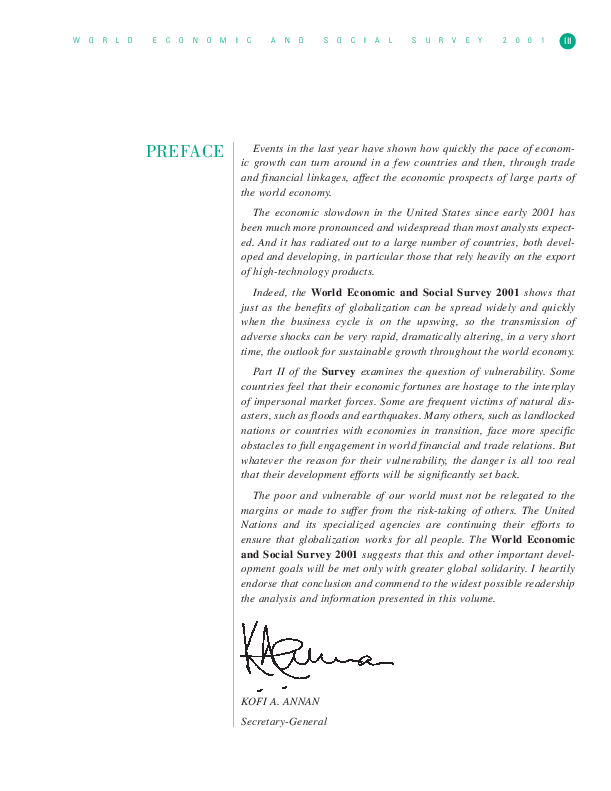
Economic growth in 2000 was unexpectedly and unusually high and widespread. The increase in gross world product exceeded the earlier forecast of 3.5 per cent and was the strongest in more than a decade. This outcome was the result of improvements in
The targets of international development strategies have not been met in the past. A different approach is needed. Implementation should be readily monitored, progress measured and, where necessary, supplementary actions identified. A revitalized flow of development finance through both official channels and private institutions is necessary. Democratic processes of good governance and increased trade openness are also required for a peaceful and prosperous world. More effective integration of the developing countries into the global trading system remains a major challenge. Enhanced access to and improvement of education, skills, infrastructure and new technologies are increasingly needed…
This paper addresses the growing concern in the international community in recent years with the widening IT gap, or information divide so called, between urban and rural areas in developing economies and between the rich and the poor economies. The paper will first look at the current situation of management and utilisation of IT in developing economies and secondly at possible strategies and measures that the United Nations could take to assist developing countries to improve the management and utilisation of IT for efficient, effective, equitable and sustainable development.
 Welcome to the United Nations