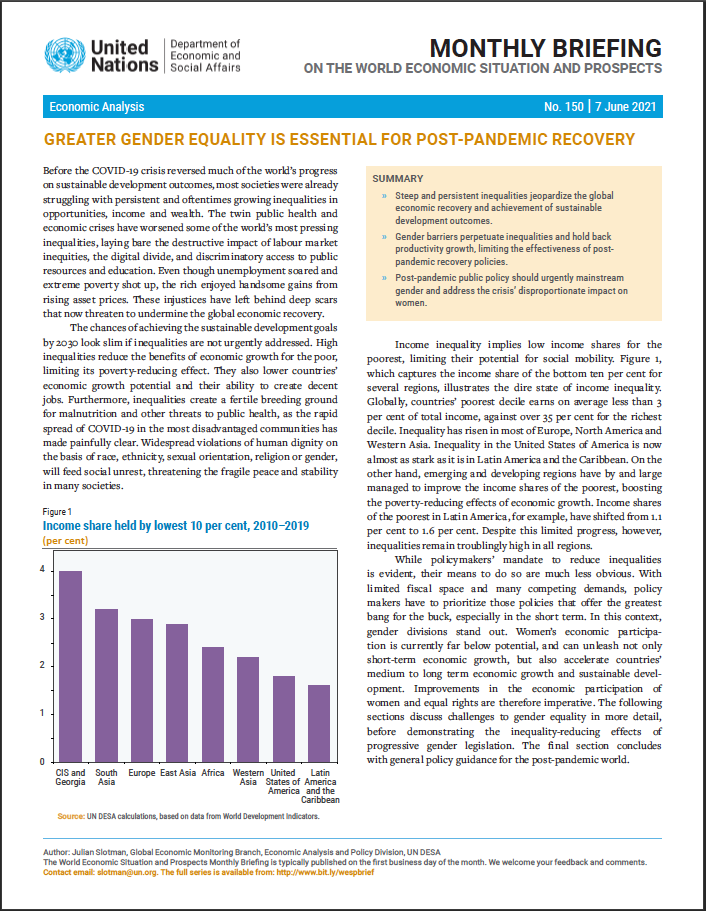
Gender barriers perpetuate inequalities and hold back productivity growth, limiting the effectiveness of post-pandemic recovery policies. Post-pandemic public policy should urgently mainstream gender and address the crisis? disproportionate impact on women.
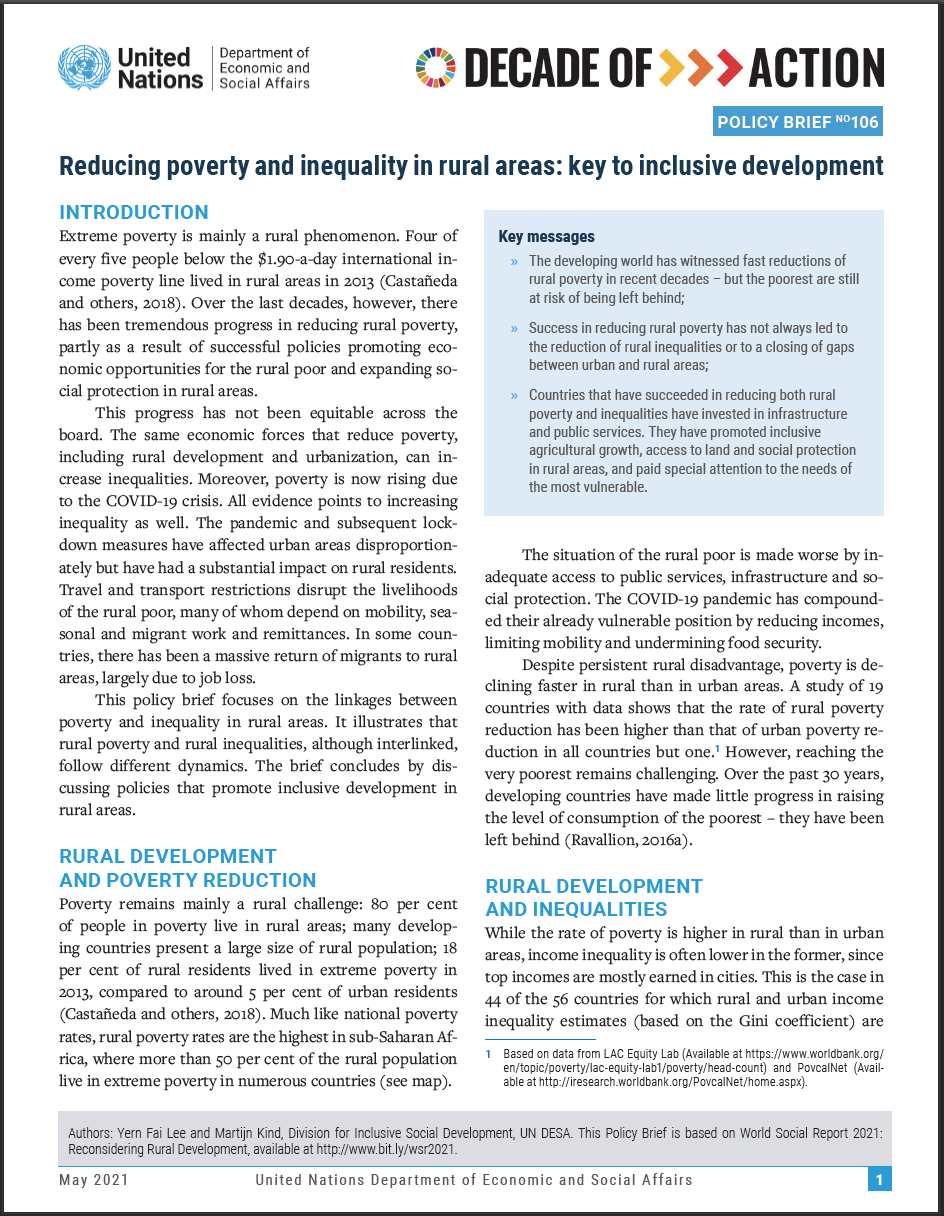
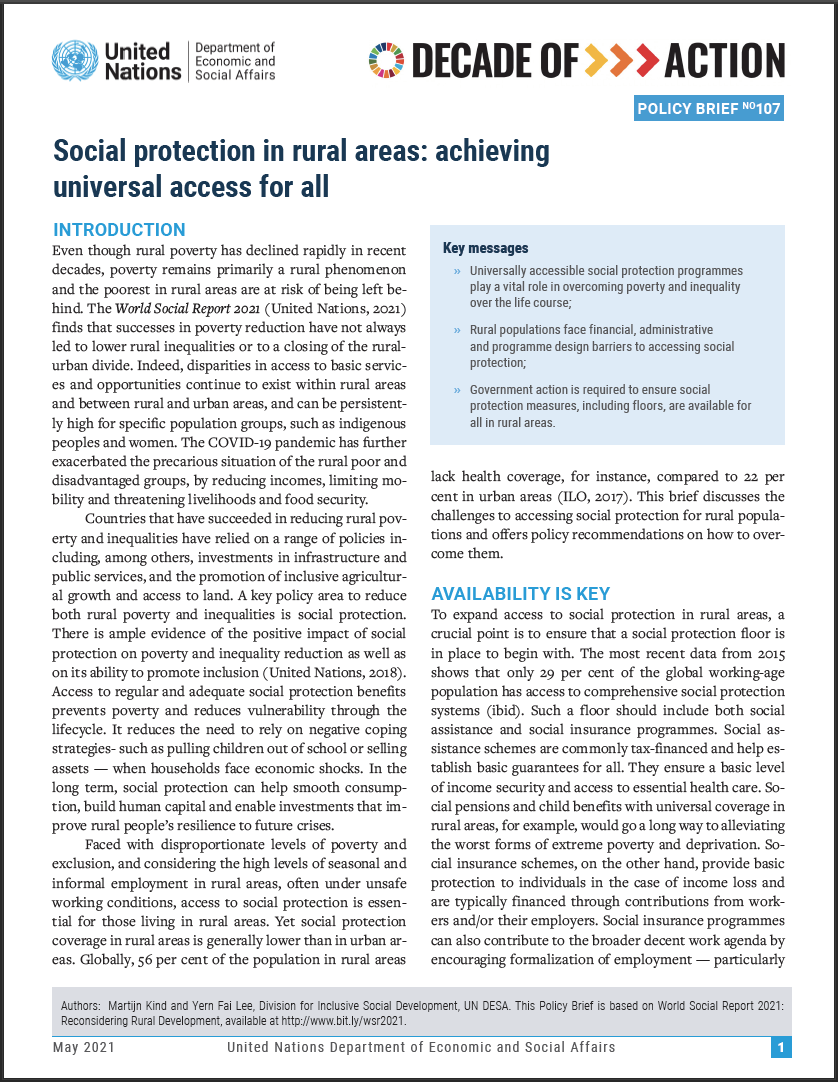
Countries that have succeeded in reducing both rural poverty and inequalities have promoted inclusive agricultural growth, access to land and social protection in rural areas, and paid special attention to the needs of the most vulnerable.
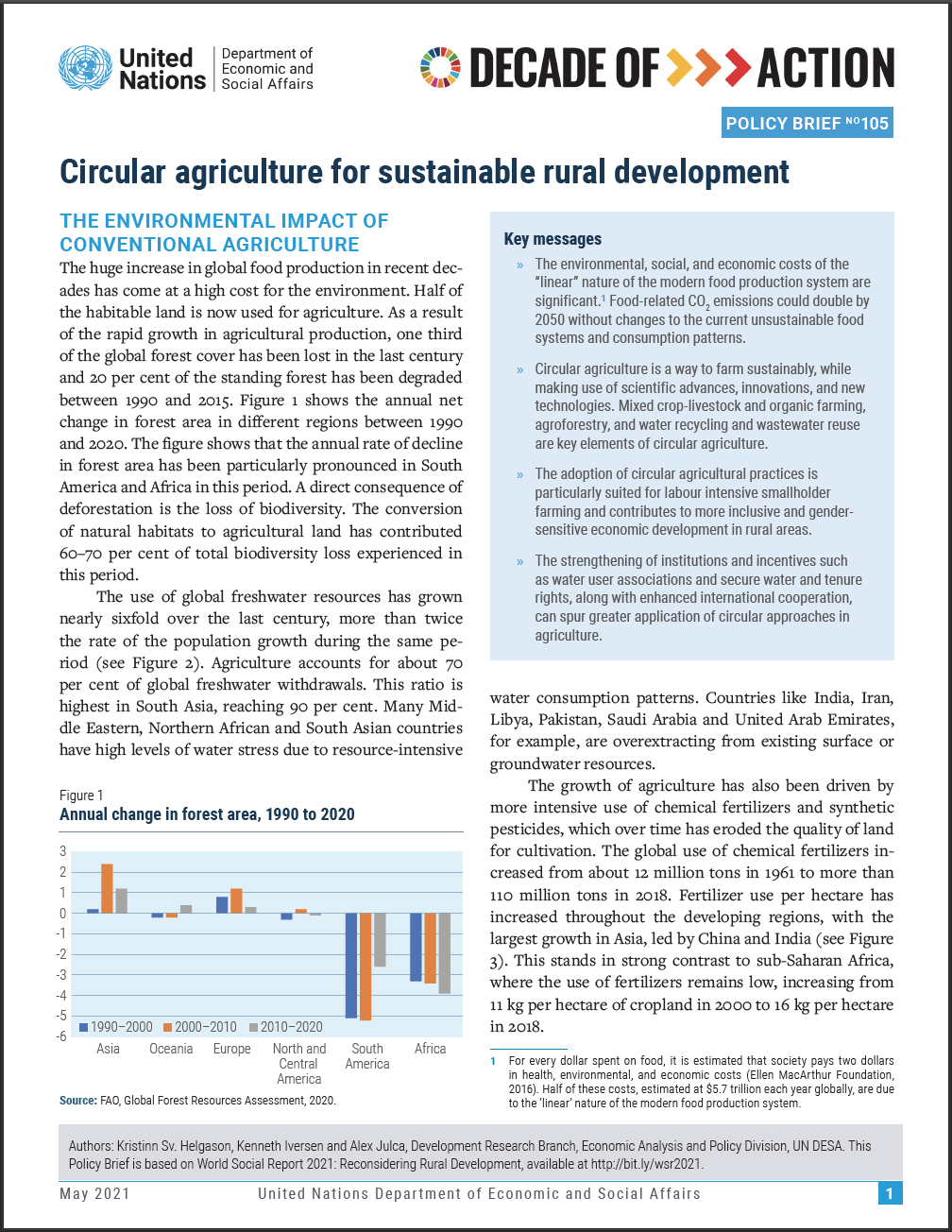
The strengthening of institutions and incentives such as water user associations and secure water and tenure rights, along with enhanced international cooperation, can spur greater application of circular approaches in agriculture.
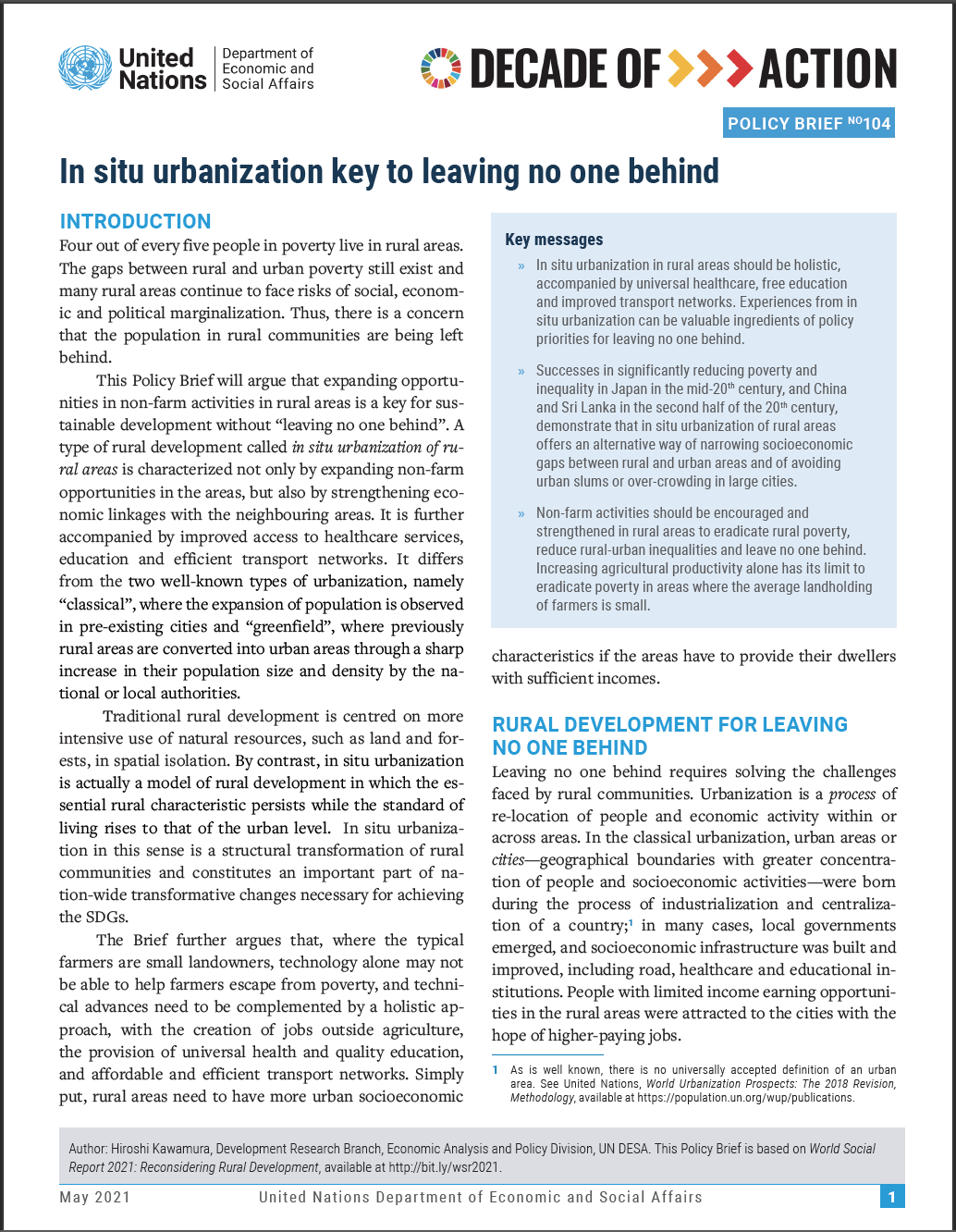
Expanding opportunities in non-farm activities in rural areas is a key for sustainable development without ?leaving no one behind?. Where the typical farmers are small landowners, technology alone may not be able to help farmers escape from poverty, and technical advances need to be complemented by a holistic approach.
Selon les derni?res pr?visions des Nations Unies, publi?es aujourd?hui, si les perspectives de croissance mondiale s?am?liorent, une recrudescence du nombre de personnes contamin?es par la COVID-19 menacent une relance g?n?rale de l??conomie mondiale.
 Welcome to the United Nations