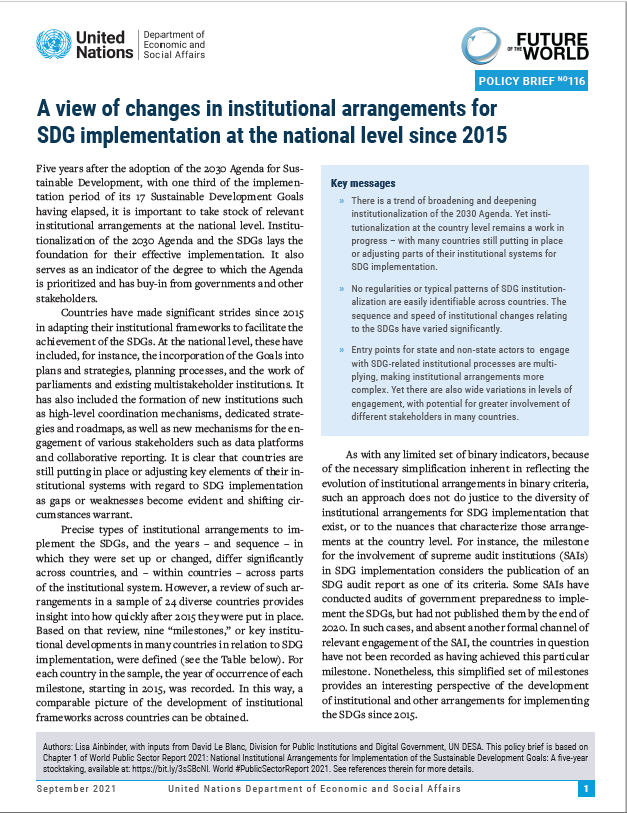
There is a trend of broadening and deepening institutionalization of the 2030 Agenda. Yet institutionalization at the country level remains a work in progress ? with many countries still putting in place or adjusting parts of their institutional systems for SDG implementation.
Unilateral economic measures as a means of political and economic coercion against developing countries (A/76/310)
عربي, 中文, English, Français, Русский, Español
Development cooperation with middle-income countries (A/76/375)
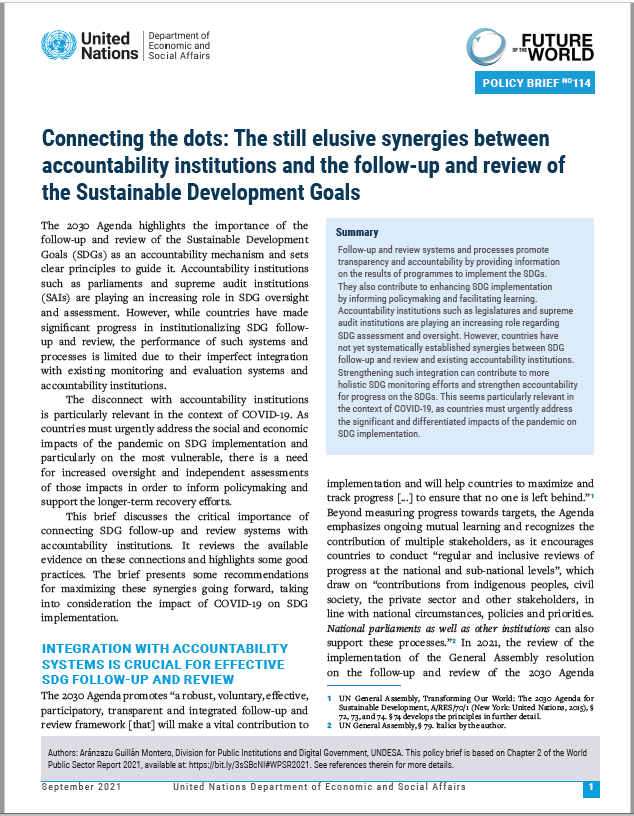
Strengthening such integration can contribute to more holistic SDG monitoring efforts and strengthen accountability for progress on the SDGs. This seems particularly relevant in the context of COVID-19, as countries must urgently address the significant and differentiated impacts of the pandemic on SDG implementation.
Integrated policy-making has been critical in responding effectively to the pandemic, and will be paramount in post-COVID recovery to realize the Sustainable Development Goals.
The general preliminary conclusion is that the impacts on development cooperation will be relatively small, as most development partners do not rely on whether or not a country is an LDC as a primary determinant of their assistance.
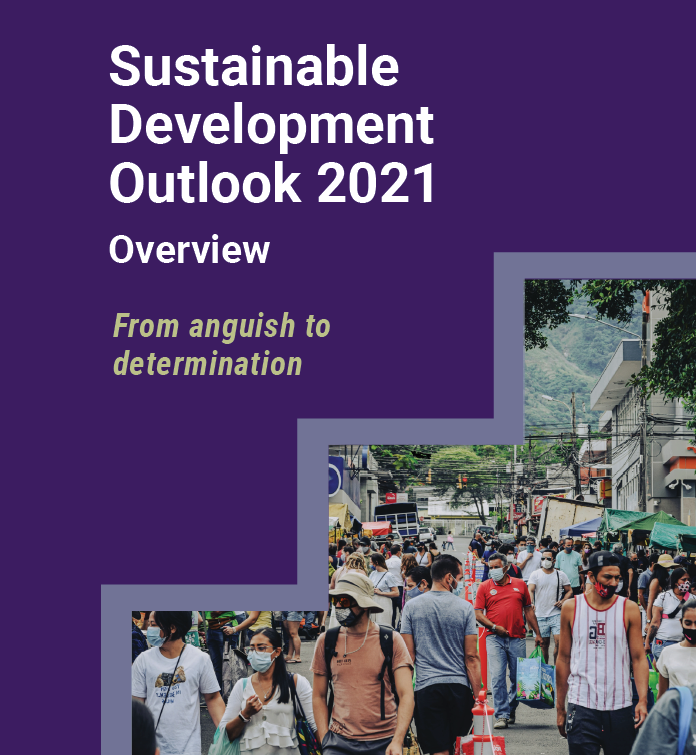
In charting out the way forward, Sustainable Development Outlook 2021 focuses on policy efforts that are cross-cutting in nature and have positive effects on multiple SDGs.
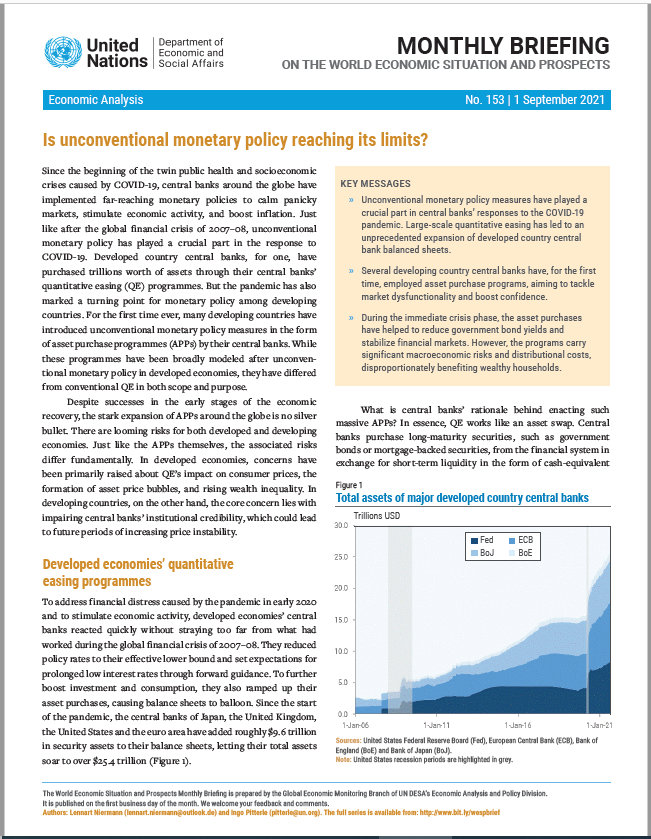
Unconventional monetary policy measures have played a crucial part in central banks? responses to the COVID-19 pandemic. Large-scale quantitative easing has led to an unprecedented expansion of developed country central bank balanced sheets.
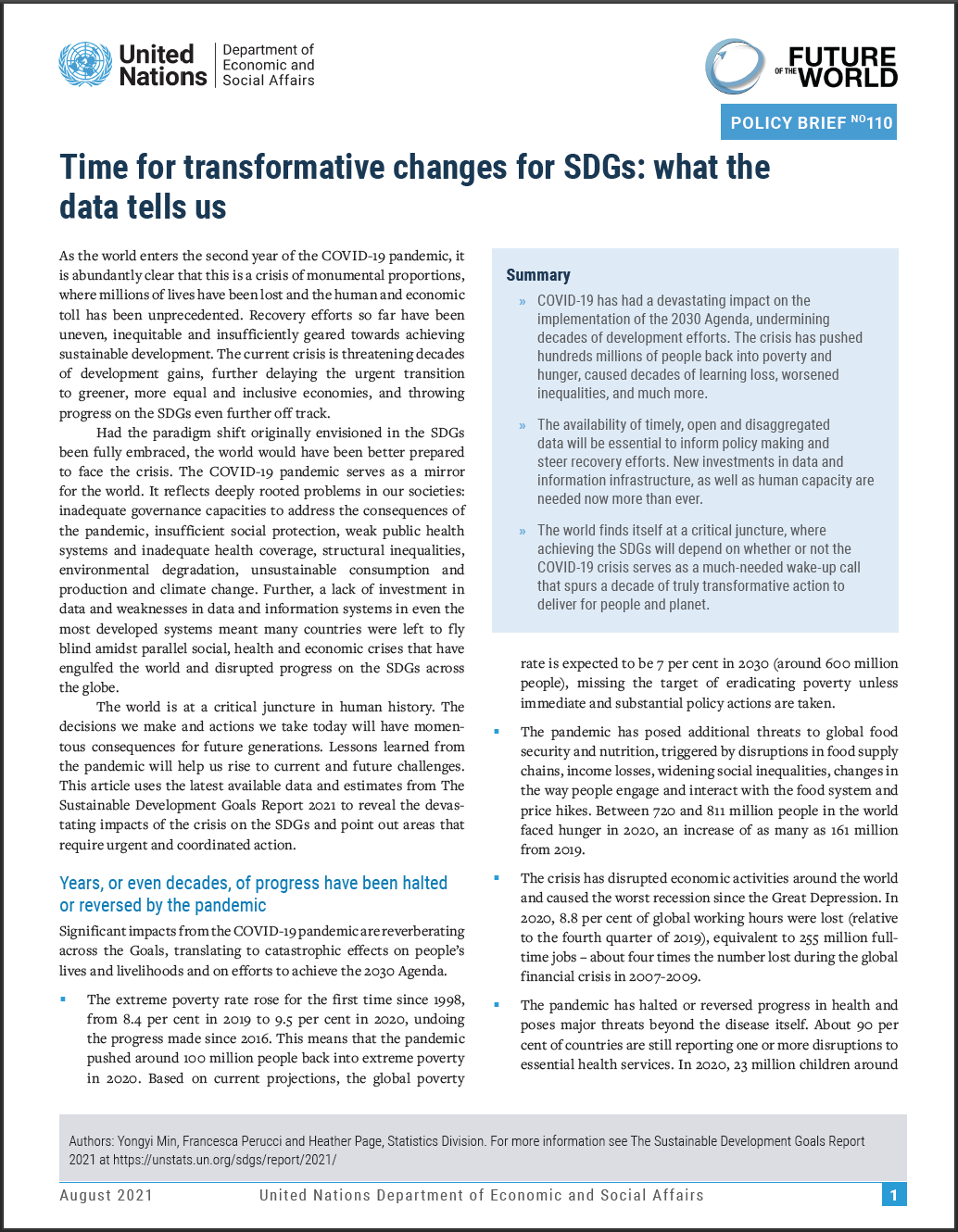
COVID-19 has had a devastating impact on the implementation of the 2030 Agenda, undermining decades of development efforts. The crisis has pushed hundreds millions of people back into poverty.
 Welcome to the United Nations