Publications

Displaying 11 - 20 of 1087
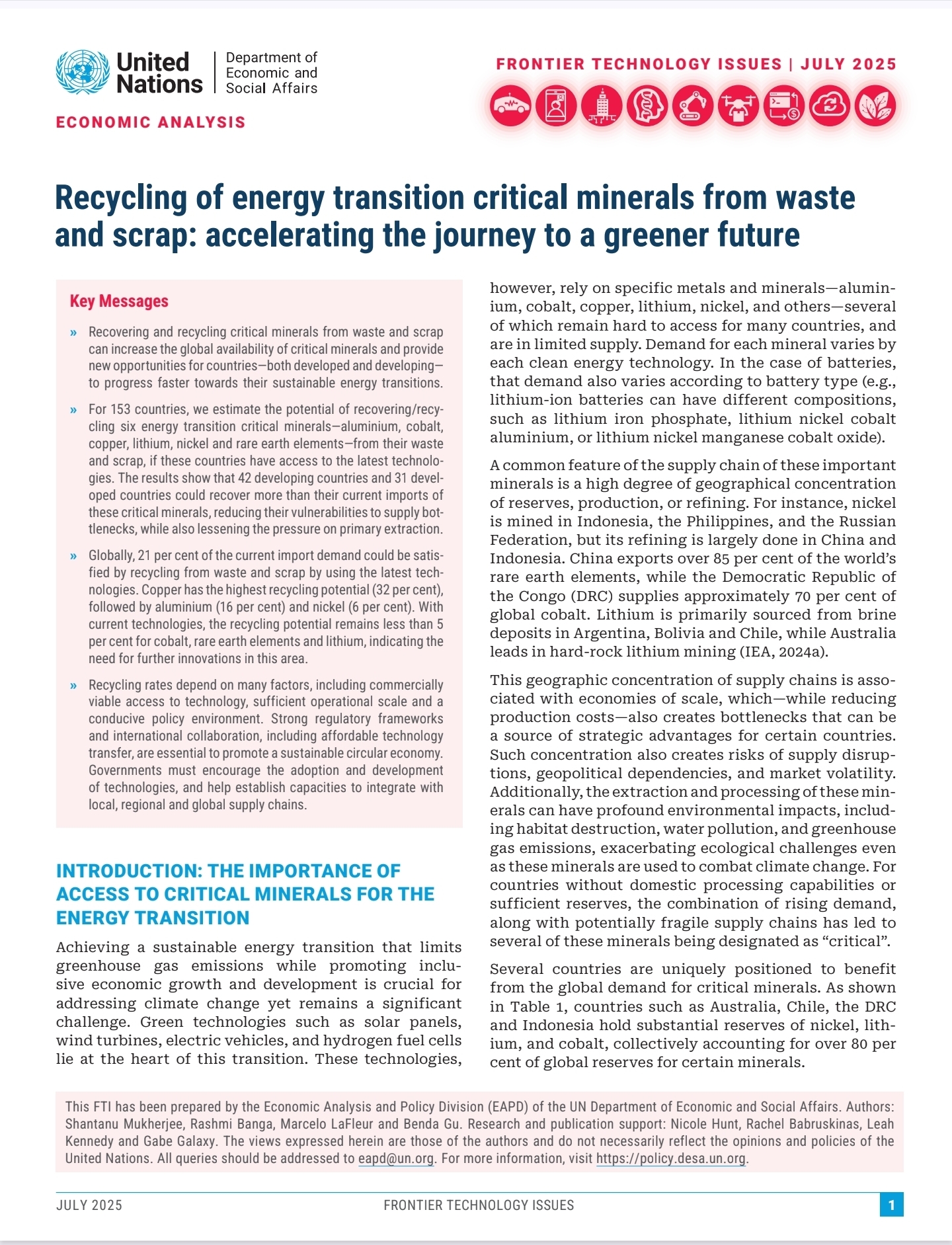
For 153 countries, we estimate the potential of recovering/recycling six energy transition critical minerals—aluminium, cobalt, copper, lithium, nickel and rare earth elements—from their waste and scrap, if these countries have access to the latest technologies.
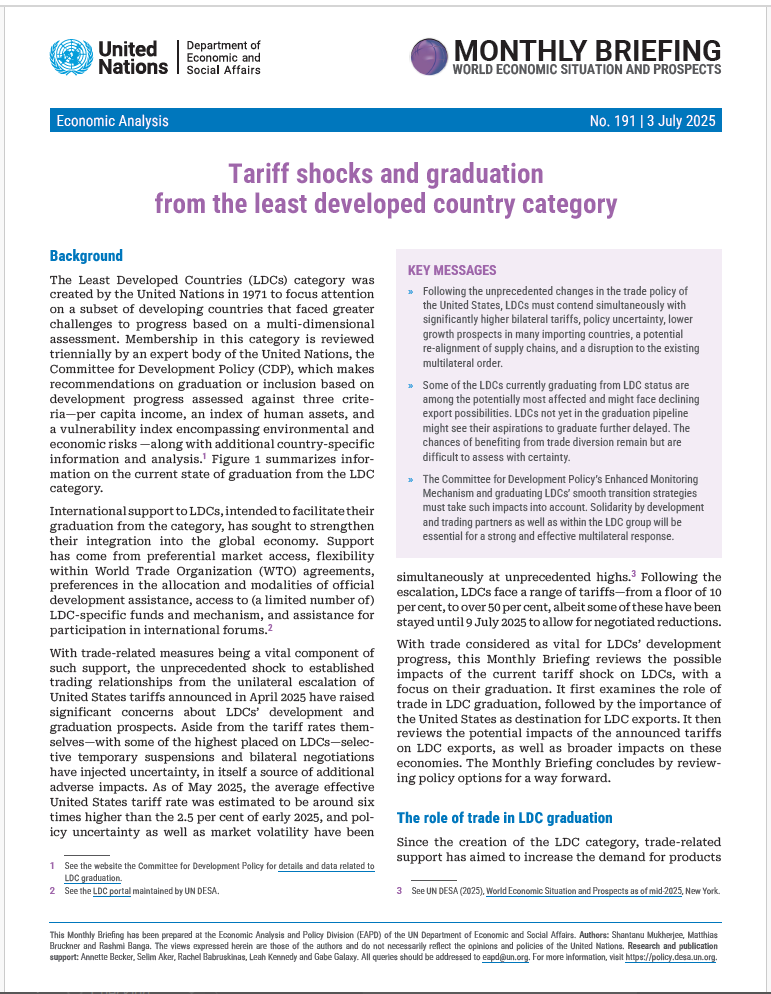
Following the unprecedented changes in the trade policy of the United States, LDCs must contend simultaneously with significantly higher bilateral tariffs, policy uncertainty, lower growth prospects in many importing countries, a potential re-alignment of supply chains, and a disruption to the existing
multilateral order.
Unilateral economic measures as a means of political and economic coercion against developing countries, 80th session, agenda item 16(a): Macroeconomic policy questions: international trade and development
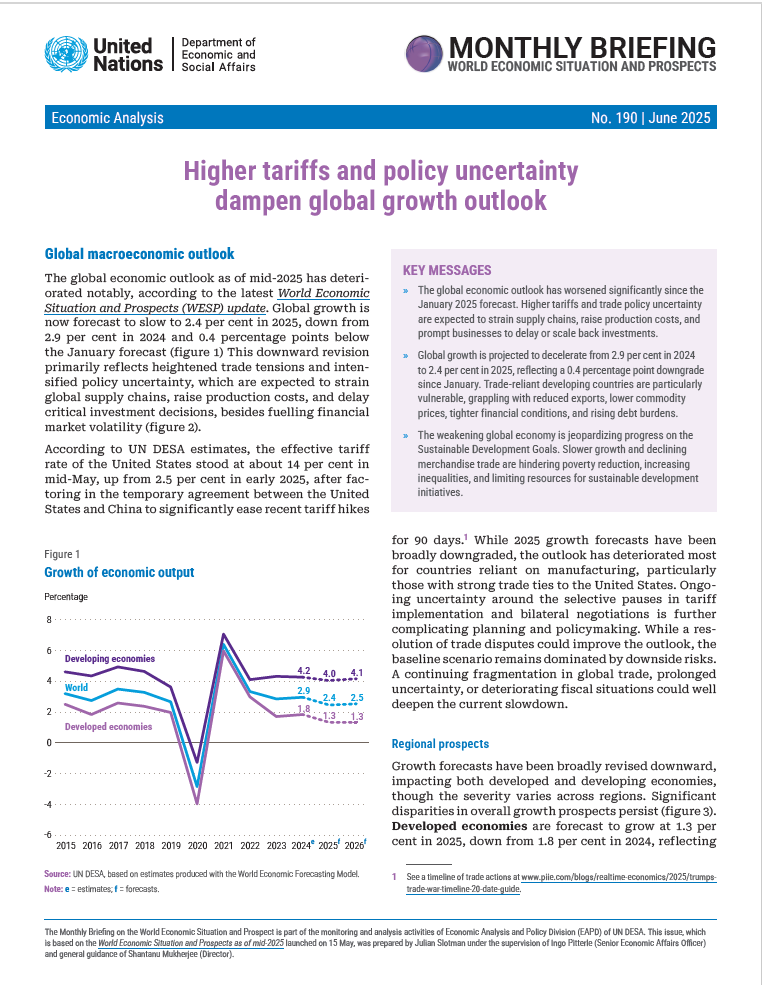
The global economic outlook as of mid-2025 has deteriorated notably, according to the latest World Economic Situation and Prospects (WESP) update. Global growth is now forecast to slow to 2.4 per cent in 2025, down from 2.9 per cent in 2024 and 0.4 percentage points below the January forecast.
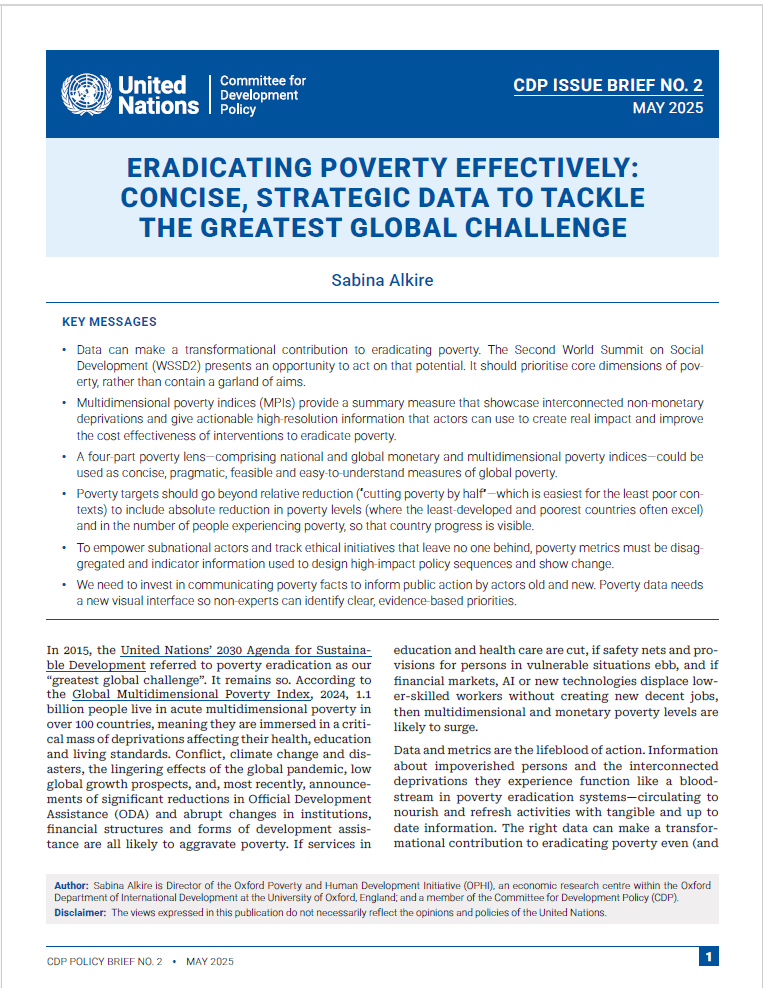
In the second CDP Issue Brief, Sabina Alkire discusses the potential of data for poverty eradication and the opportunities for WSSD2 to act on that potential.
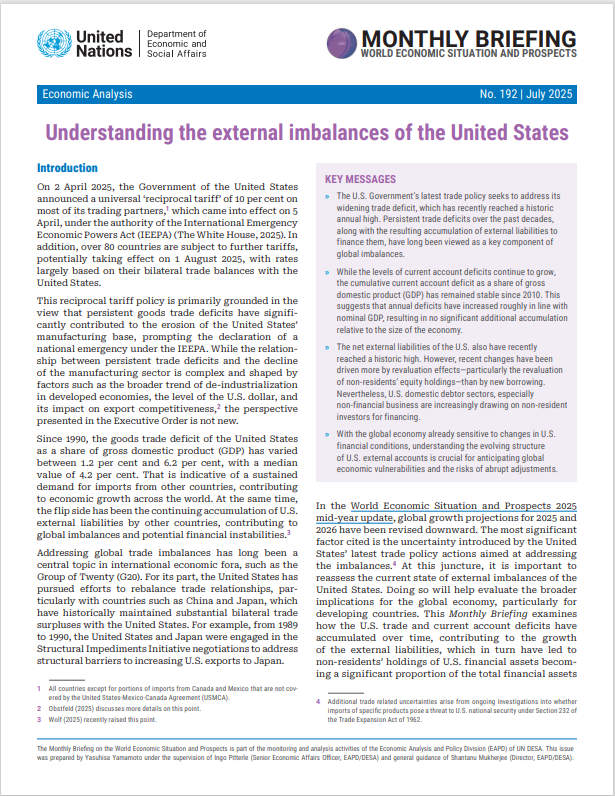
A sudden escalation of trade tensions has sent shockwaves through the global economy, dampening growth prospects while fueling uncertainty and inducing financial market volatility.
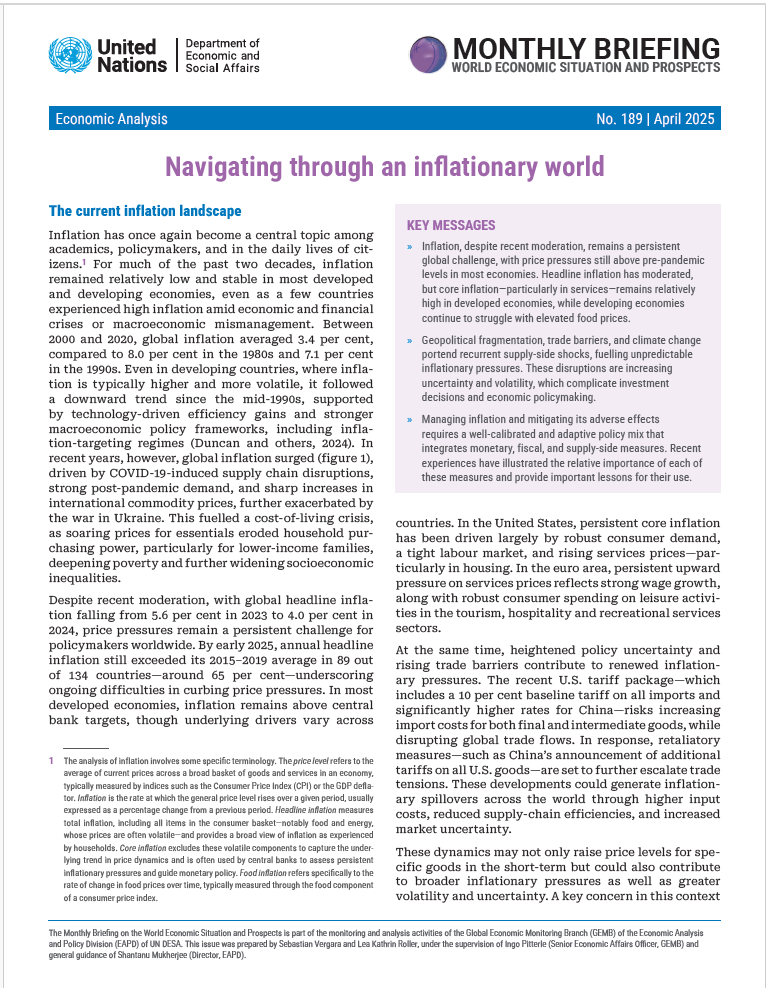
Geopolitical fragmentation, trade barriers, and climate change portend recurrent supply-side shocks, fuelling unpredictable inflationary pressures. These disruptions are increasing uncertainty and volatility, which complicate investment decisions and economic policymaking.
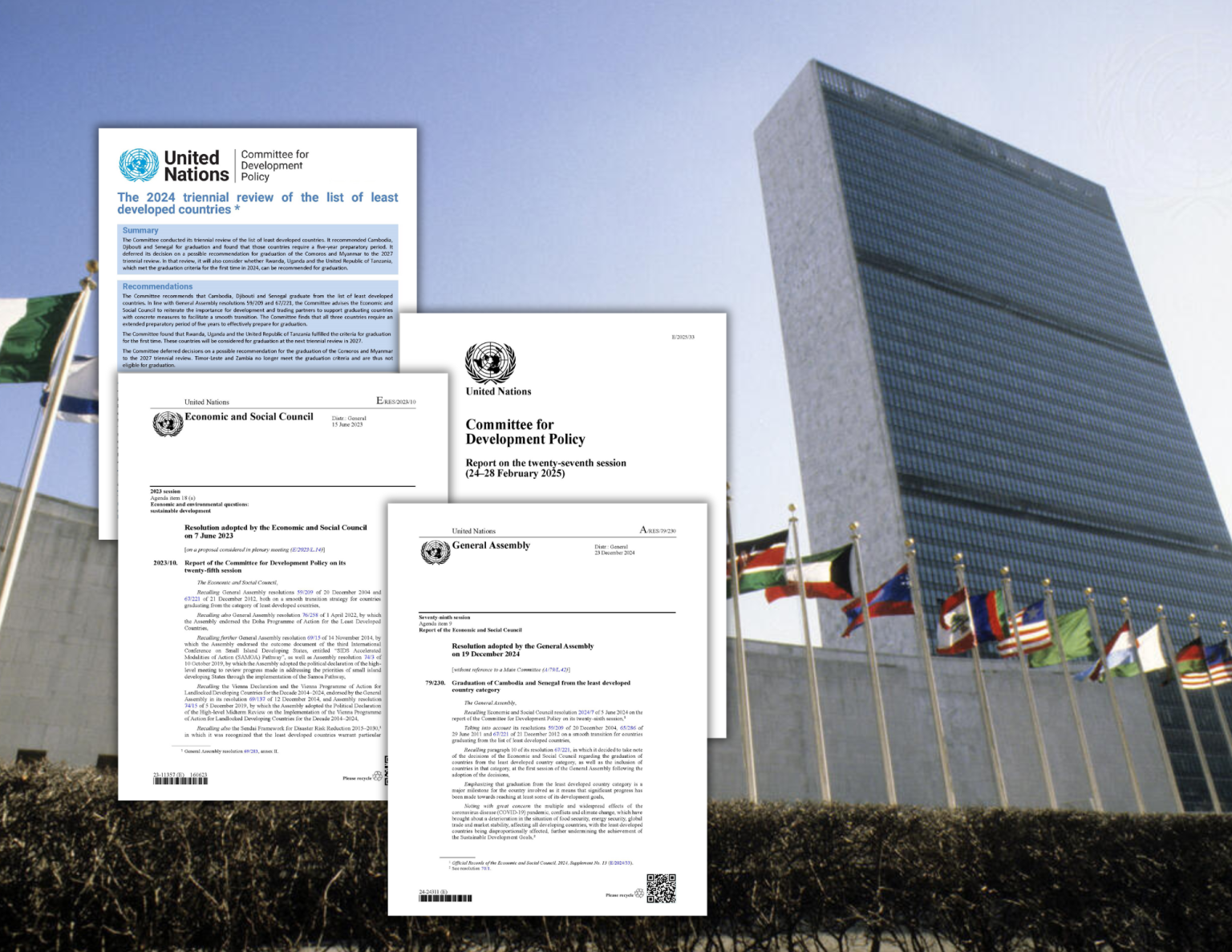
Report of the Committee for Development Policy (E/2025/33, Supplement No. 13)
عربي, 中文, English, Français, Русский, Español CDP excerpts on the report by theme New development contexts and pathways Convergence in human and social development
Reports for Bangladesh, Bhutan, Cambodia, Lao People's Democratic Republic, Nepal, Sao Tome and Principe, Senegal, Solomon Islands
Global trade has undergone an extraordinary transformation over the past five decades. However, a succession of shocks has profoundly altered global trade dynamics, exposed vulnerabilities in supply chains, shifted policy priorities, and fuelled geopolitical frictions.